The latest hearing on a proposed eight-building data center campus in Limerick Township focused largely on landscaping and expert qualifications, leaving many of the project's major operational questions for future sessions.
Tuesday's hearing, which lasted more than four hours, marked the fifth installment of the conditional use proceeding for MCD7, LLC's proposed data center campus on approximately 191 acres near the Limerick Generating Station and Philadelphia Premium Outlets.
One of the night's most notable developments came early, when the Limerick Township Board of Supervisors declined to qualify landscape architect Dannielle Carr of LaBella Associates as an expert witness.
Carr said she has more than three decades of experience and holds an active landscape architecture license in New York, but her Pennsylvania license has been inactive since the early 1990s. She also testified that the MCD7 proposal is her first data center project.
After initially deadlocking on whether to accept her as an expert and briefly meeting in executive session, supervisors agreed to allow Carr to testify as a fact witness instead. Attorney Ed Campbell, representing MCD7, objected to the board’s decision not to qualify Carr as an expert witness.
Landscaping Plan Examined
Carr testified about plans to replace woodlands removed by the development and establish landscaped buffers around the property.
Approximately 38 acres of woodland are proposed to be cleared. Under the township ordinance, Carr said the project would be required to replace approximately 25,000 caliper inches of trees, with the current plan slightly exceeding that requirement.
The proposed buffer would include a mixture of deciduous and evergreen trees and shrubs intended to restore woodland and reduce the project's visual impact.
Cross-examination, however, highlighted how long that screening could take to mature.
Carr said some canopy trees could eventually reach 60 to 80 feet but could take roughly 15 to 30 years to reach maturity. The proposed data center buildings would stand approximately 85 feet tall.
Asked whether she had conducted a visual analysis, sightline study, or cross-section from neighboring properties, Carr said the proposed buffer and woodland restoration plantings comply with township code.
Questions were also raised about the tree assessment used to calculate the project's woodland replacement requirement. Carr did not prepare that assessment herself but said it is customary for landscape architects to rely on work performed by other professionals on a project team.
Fiscal Impact Witness Introduced
Later in the hearing, the applicant introduced land planner Erik Hetzel, who prepared a fiscal-impact analysis examining potential effects on Limerick Township, the Spring-Ford Area School District, and Montgomery County.
Hetzel testified that he has prepared hundreds of fiscal-impact studies during his career, including approximately 15 involving data centers over the past two years.
An attorney representing Limerick Township challenged the extent of Hetzel's qualifications and questioned the methodology used to estimate the future value of the proposed development.
Hetzel acknowledged that he is not a licensed real estate appraiser and said the value used in his analysis was not based on a formal appraisal. Instead, he said he used research on data center capital expenditures and commercial real estate industry estimates of development costs to establish a baseline for estimating the general magnitude of potential fiscal impacts.
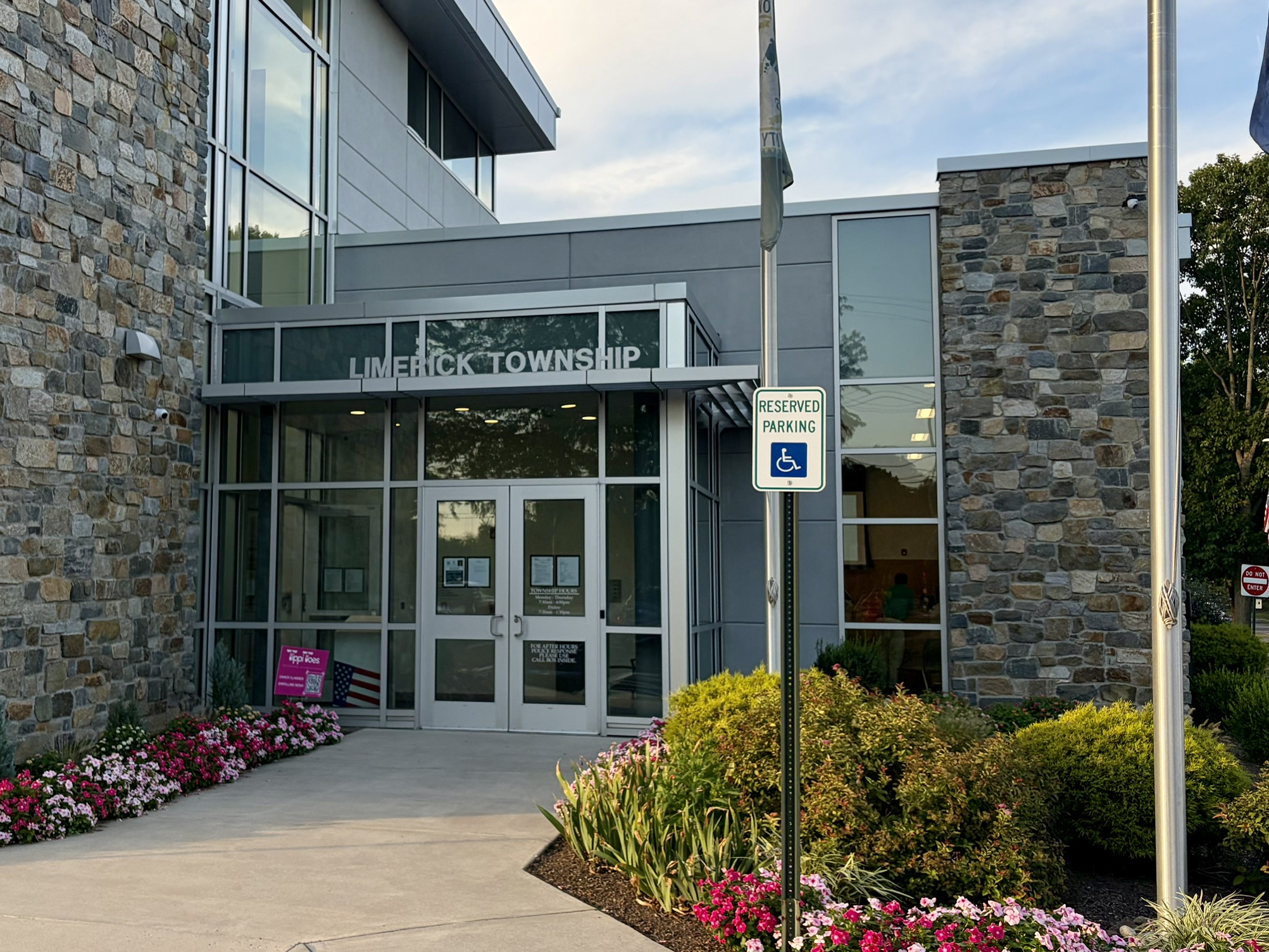
The board did not resolve Hetzel's expert qualifications before concluding Tuesday's session. The proceeding is scheduled to resume September 8 at 6:30 p.m. at the Limerick Township Building.
Expert testimony on other issues raised throughout the months-long hearing — including noise, cooling systems, air emissions, generators, and emergency planning — has yet to be presented.
Spring-Ford Press has covered each stage of the MCD7 conditional use proceeding since it began in April, including the opening hearing on party status, the May hearing focused on the site plan, the June continuation and introduction of new exhibits, and the July hearing that left operational questions unresolved.