Limerick Supervisors Begin Data Center Hearing, Focus on Who Can Participate
AI
Powered by diffuse.ai
•
Published Apr 15, 2026 at 1:20 AM EDT (Updated Apr 15, 2026 at 10:54 AM EDT)
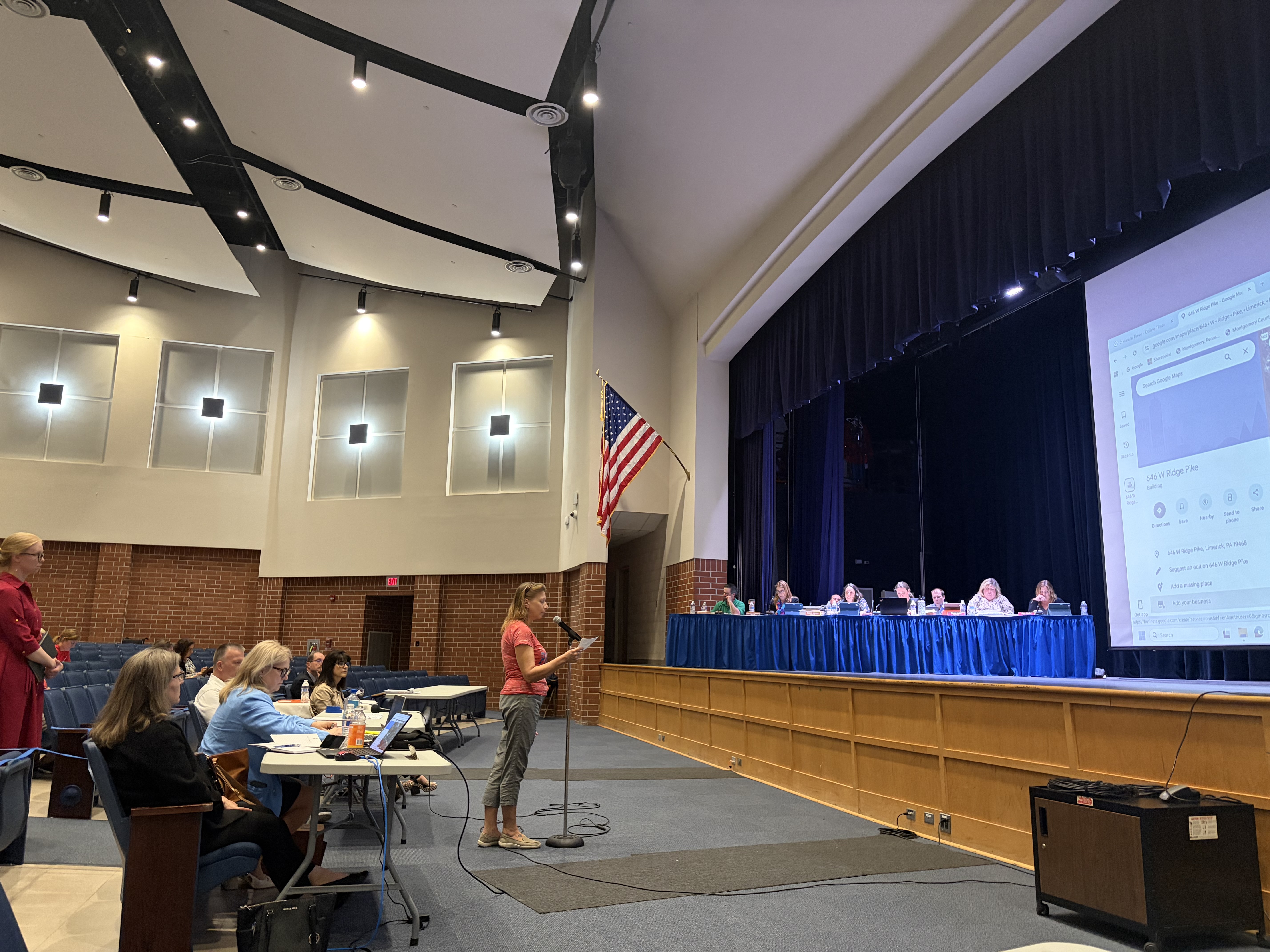
Joanne Konschak was one of many residents who requested party status.
A proposed data center campus near the Limerick Generating Station and Philadelphia Premium Outlets entered its first hearing before the Limerick Township Board of Supervisors Tuesday night, quickly focusing on one question: who will be allowed to participate as a legal party in the case?
The April 14 conditional use hearing — expected to be the first in a series over the coming months — did not reach substantive testimony on the project itself. Instead, most of the evening was devoted to determining “party status,” a legal designation that allows individuals and entities to present evidence, cross-examine witnesses, and potentially appeal a final decision.
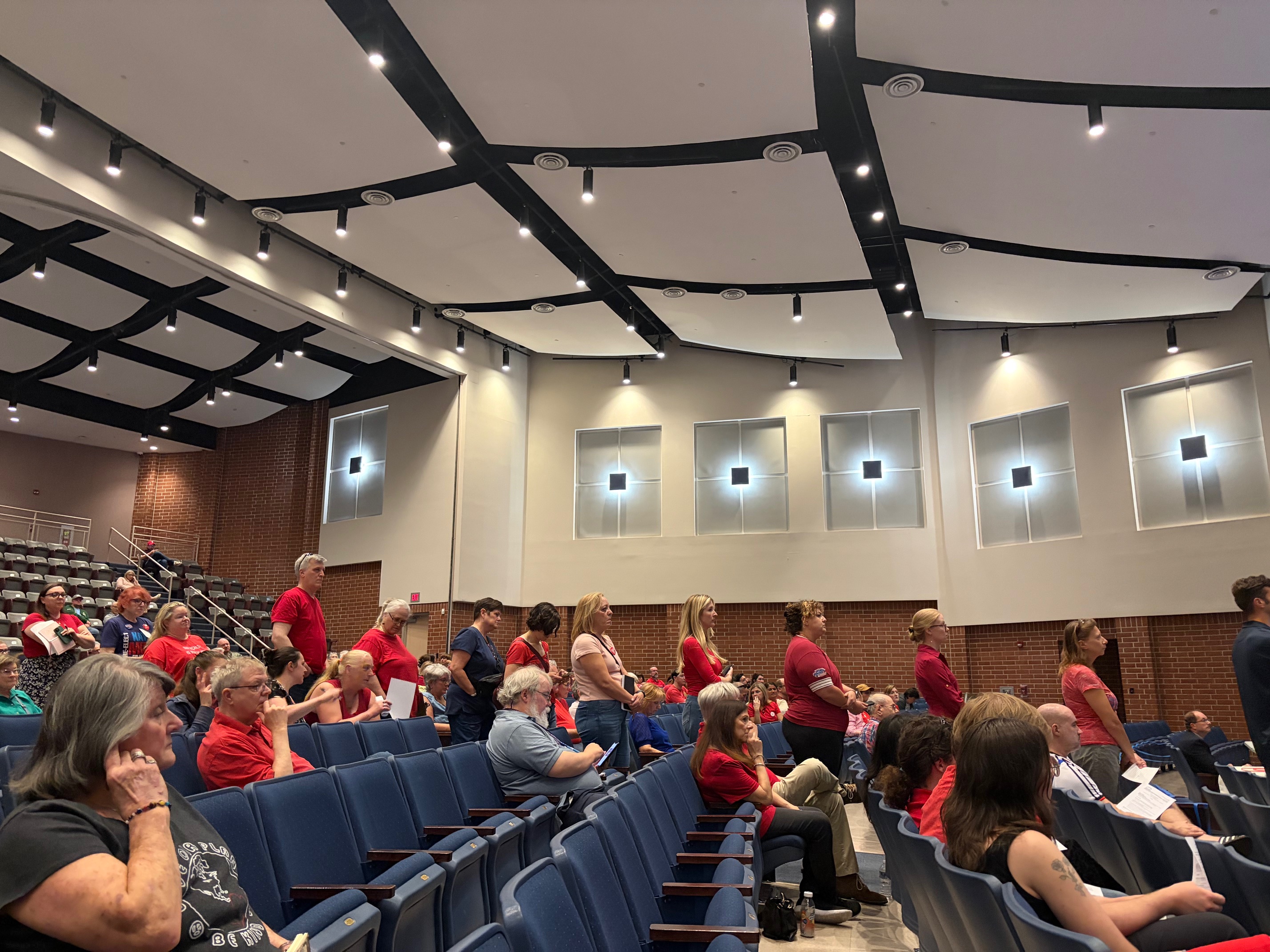
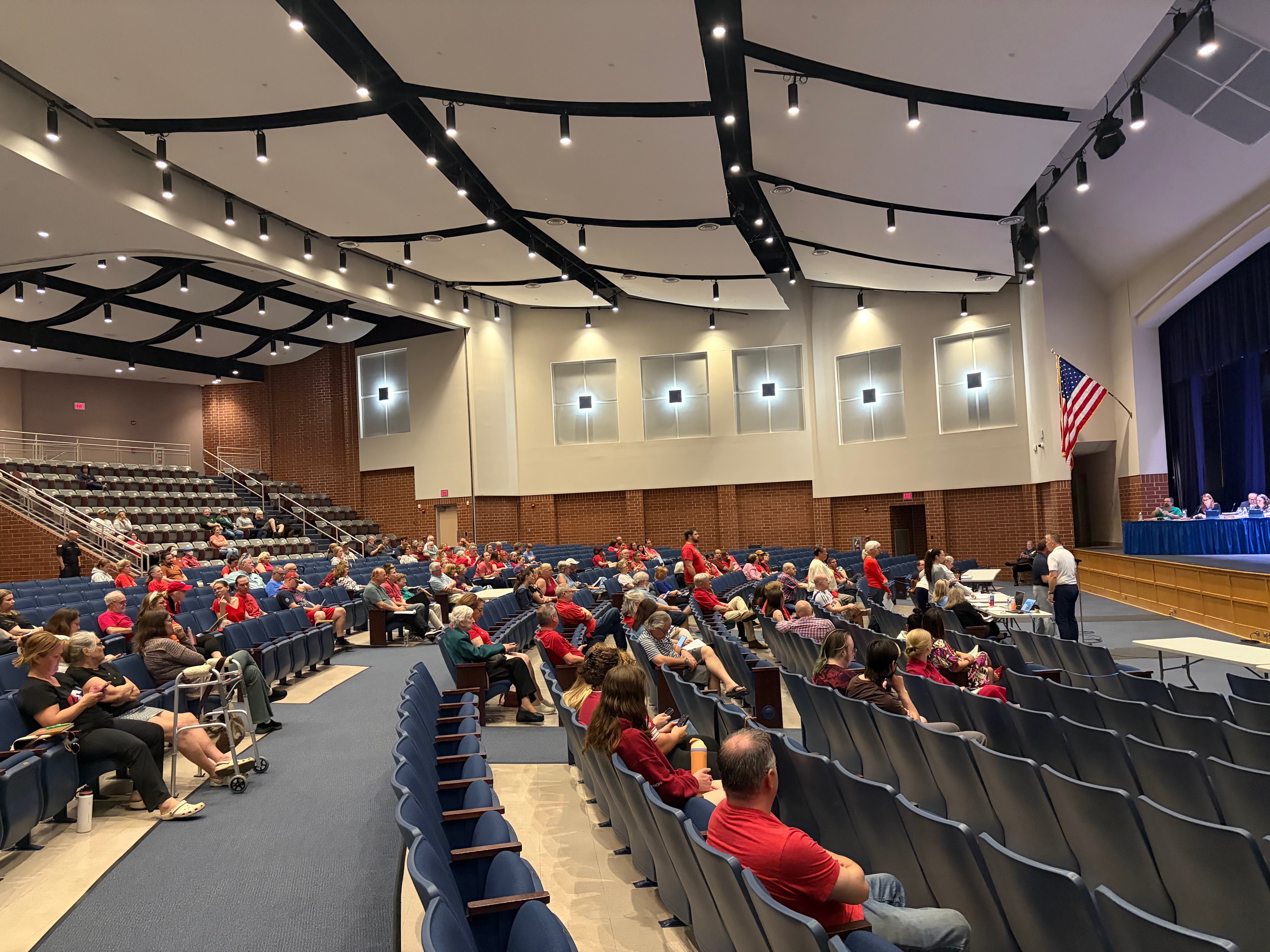
The hearing was held at Spring-Ford Area High School to accommodate the larger crowd, which included more than 100 people.
Large-Scale Data Center Proposed
The application, submitted by MCD7, LLC, seeks approval for a data center campus on approximately 191 acres across seven parcels.
According to township officials, the proposal includes:
Eight two-story data center buildings totaling nearly 2.8 million square feet
Three substation and support facilities totaling just under 500,000 square feet
Development near the Limerick Generating Station and existing commercial areas
Because the project requires conditional use approval, the board of supervisors — not the planning commission — will determine whether it meets township zoning standards. The Limerick Planning Commission reviewed the proposal last week and recommended that supervisors deny approval unless extensive conditions can be met.
Party Status Dominates Opening Night
Before any detailed testimony could begin, the board turned to a lengthy series of party status requests, starting with a group of nearby residents represented by an attorney.
Several individuals living within roughly 400 feet of the site were granted party status without objection. Others were considered individually, with the board weighing factors such as proximity, whether nearby neighbors had already been approved, and whether applicants demonstrated a “direct, immediate, and substantial” interest beyond that of the general public.
Many residents cited concerns related to health, water, and the environment. The developer’s attorney, Ed Campbell, frequently challenged whether those concerns were unique or broadly shared.
A number of attendees wore red to show solidarity in opposition to the data center proposal.
Early Exchange Sets Tone
One of the more contentious early exchanges involved Linfield resident Terry Arthur, whose attorney argued that her proximity — about 0.8 miles from the site — and personal circumstances justified party status.
Arthur’s attorney outlined concerns including air pollution, well water impacts, noise, and environmental changes affecting her family’s health and quality of life.
Campbell pushed back, questioning whether those concerns were supported by specific evidence or differed from those of the general public. The exchange grew increasingly pointed as he challenged claims about potential water impacts, while Arthur’s attorney objected that such technical issues would require expert testimony later in the process.
The board granted Arthur party status, but the exchange foreshadowed the legal tension that would shape much of the evening.
School District, Developers Granted Status
The Spring-Ford Area School District and developers of adjacent properties on Evergreen Road were granted party status without objection, reflecting potential institutional and development-related impacts tied to the project.
Dozens Seek Standing as Board Weighs Limits
Dozens of additional residents applied for party status, appearing one by one to explain their proximity to the site and concerns about air quality, water usage, noise, and property values.
The board voted on each request individually. About midway through the hearing, the board entered a brief executive session for legal guidance. After returning, supervisors began denying more applications, signaling a narrower interpretation of who met the legal threshold.
Many residents from nearby communities outside of Limerick Township — including East Vincent, Royersford Borough, and South Coventry — were ultimately denied.
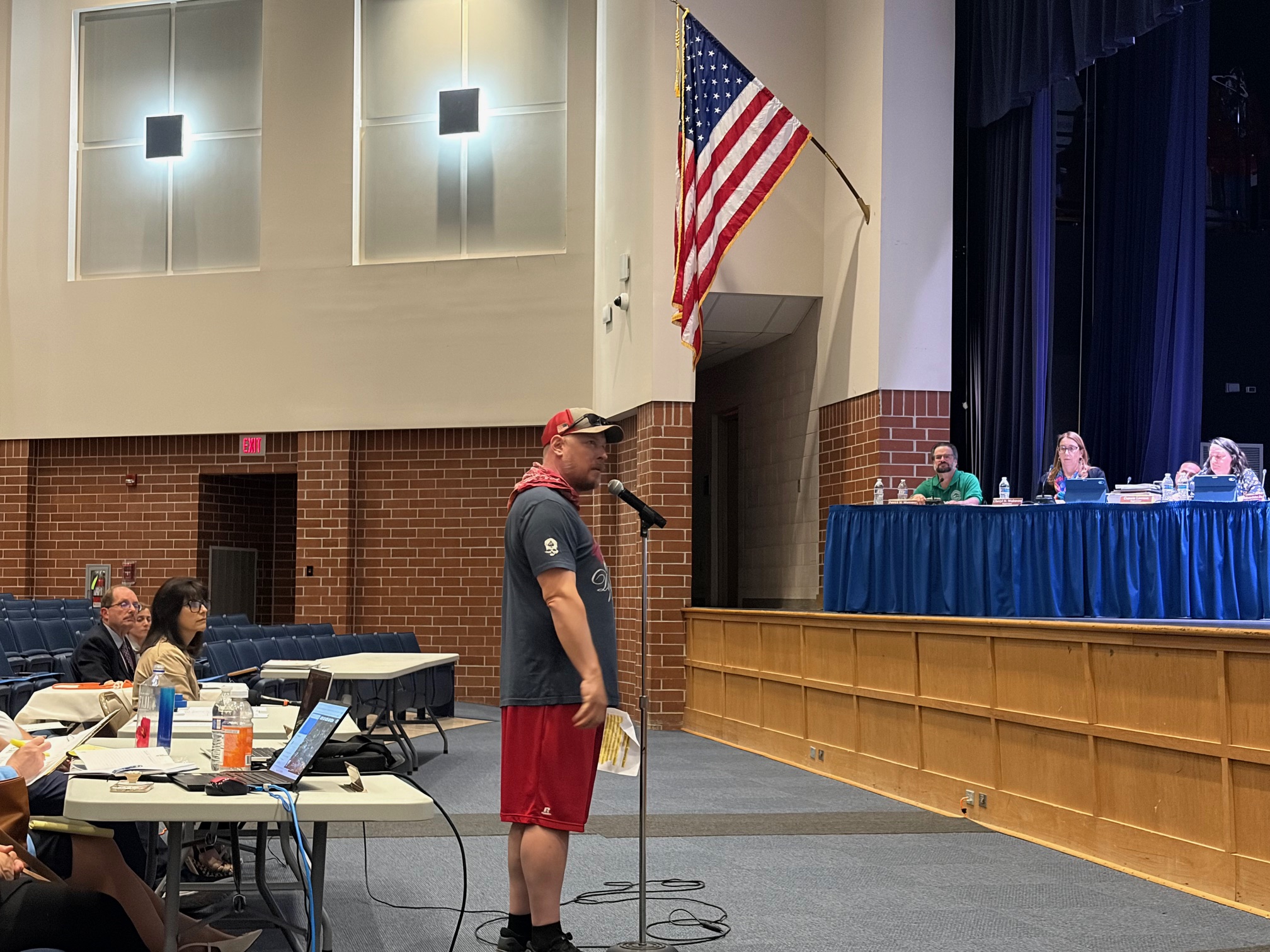
Lower Pottsgrove resdient Stephen Burd addressed the developer's team.
Applicants Voice Frustration
Cindy Ramsey, an East Vincent resident who lives near the site of another proposed data center at the Pennhurst property, was among those denied party status.
Ramsey told the board she lives about 2.5 miles from the Limerick site but is already near other proposed facilities, raising concerns about cumulative impacts. She cited a history of serious health conditions as a key reason for seeking standing.
“I'm asking for party status because not only am I going to be surrounded by data centers,” she said. “I already have health issues. I don't need any more.”
After being denied, Ramsey read a prepared statement into the record objecting to the decision and preserving her right to appeal — a step taken by several other applicants throughout the evening.
Among those granted party status was Stephen Burd, a Lower Pottsgrove resident who said he lives just over two miles from the site.
Burd criticized the siting of the project near township lines. He cited health concerns affecting both himself and his wife and argued that proximity — not municipal boundaries — should determine who is impacted.
He also highlighted the increasing number of data center proposals in the area, drawing one of the louder reactions from the audience.
“What kind of foolishness is this? You're going to throw one at Penhurst, one here, one there. For what? Every five miles?” he said, directing his words at the developer’s team. “Why are you here? It's clear you're not bringing anything to this community.”
State Senator Denied
The highest-profile denial involved State Sen. Katie Muth, who lives in East Vincent and maintains an office in Royersford Borough but does not represent Limerick Township.
Muth did not attend the hearing due to a conflicting conditional use hearing for a similar project in East Whiteland Township. A member of her staff, Nikki Whitlock, requested that the board postpone consideration of the senator’s party status application until the next hearing.
The board agreed to consider the request but ultimately denied it in a 3-2 vote, with Board President Connie Lawson and Supervisors Linda Irwin and Kara Shuler voting no, and Supervisors Cheryl Walraven and Patrick Morroney voting yes.
More than 100 people attended the hearing.
One Voice of Support
While most applicants expressed opposition, New Hanover Township resident Jeff Beck offered a different perspective.
“I can truly appreciate everybody's concerns, but I build and manufacture data centers,” he said, drawing boos from the audience.
“I request status because I have an opposing view,” he continued. “I work in these. I know how the water is treated. I know where it goes.”
While the developer’s attorney said he appreciated Beck’s support, he added that “it doesn’t sound like he has a particularized interest” to justify his inclusion.
Beck was not granted party status.
More Hearings Ahead
Township officials emphasized that Tuesday’s session was only the beginning of a longer process. Because the applicant must present witnesses and approved parties may cross-examine them, the hearing is expected to span multiple meetings.
The next hearing is scheduled for May 11, with additional dates tentatively set for June 16, July 21, and August 18, if needed.
Public comment will not occur until the evidentiary portion concludes.
This article was generated with AI assistance. All content was reviewed, edited, and fact-checked by John McGuire.