‘Tell Us Why’: Party Status Process Sparks Tension at East Vincent Data Center Hearing
AI
Powered by diffuse.ai
•
Published Apr 21, 2026 at 4:25 PM EDT (Updated Apr 26, 2026 at 5:26 PM EDT)
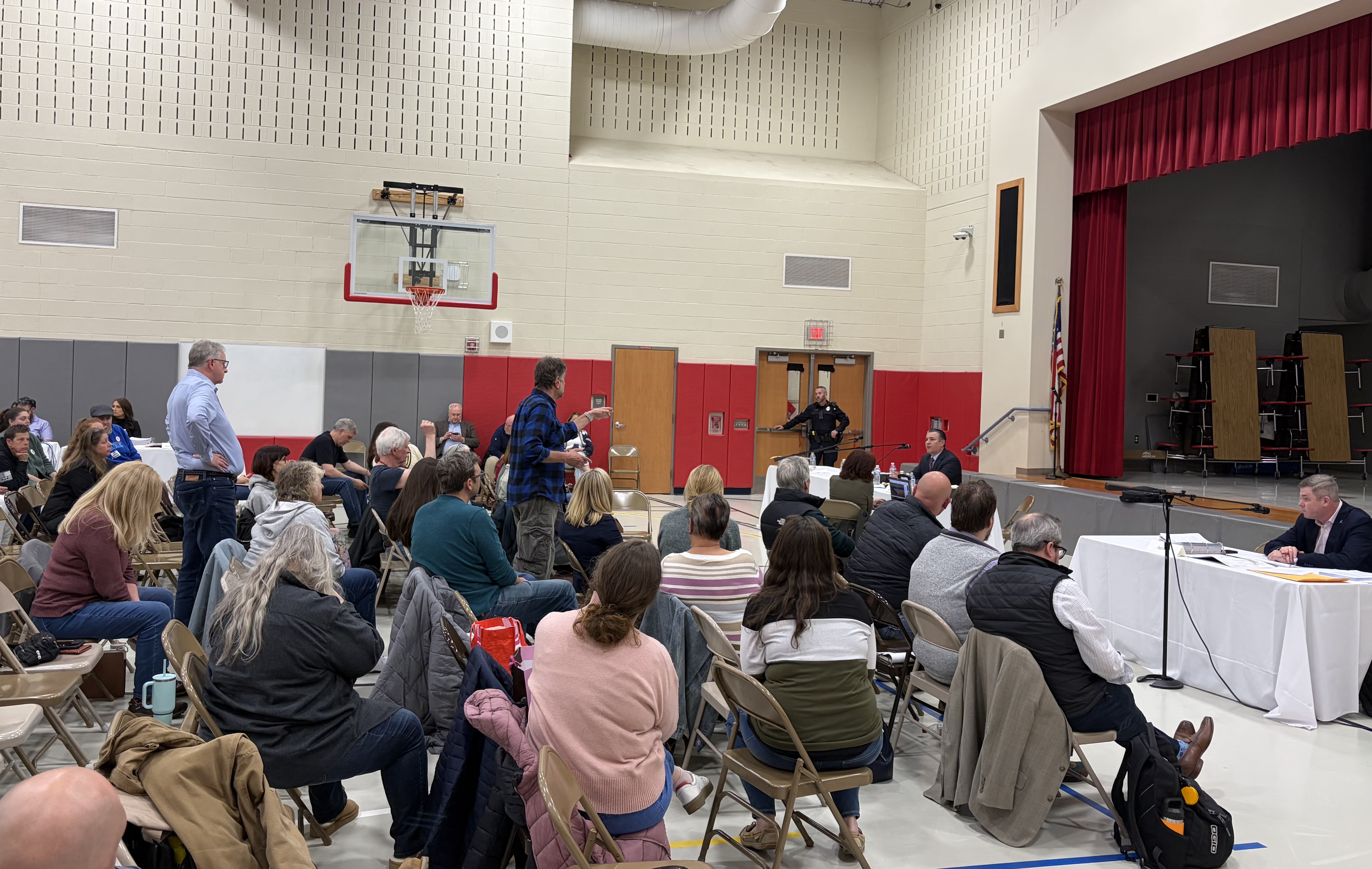
East Vincent residents Larry Schenk and Steve Hacker stood to challenge how proceedings were unfolding.
One refrain — raised repeatedly by attendees and ultimately chanted by the audience — captured the central tension of a four-and-a-half-hour conditional use hearing Monday night at East Vincent Elementary School:
“Tell us why.”
The hearing, which drew more than 150 attendees at its peak, was scheduled to begin examining a large-scale AI data center proposed by Penn Hurst Holdings DE, LLC at the Pennhurst site. The plan includes a nearly 1.9 million-square-foot campus across three buildings, along with a five-acre power generation and battery storage area.
Instead, much of the evening was consumed by disputes over party status — a legal designation that determines who can present evidence, call witnesses, and cross-examine testimony.
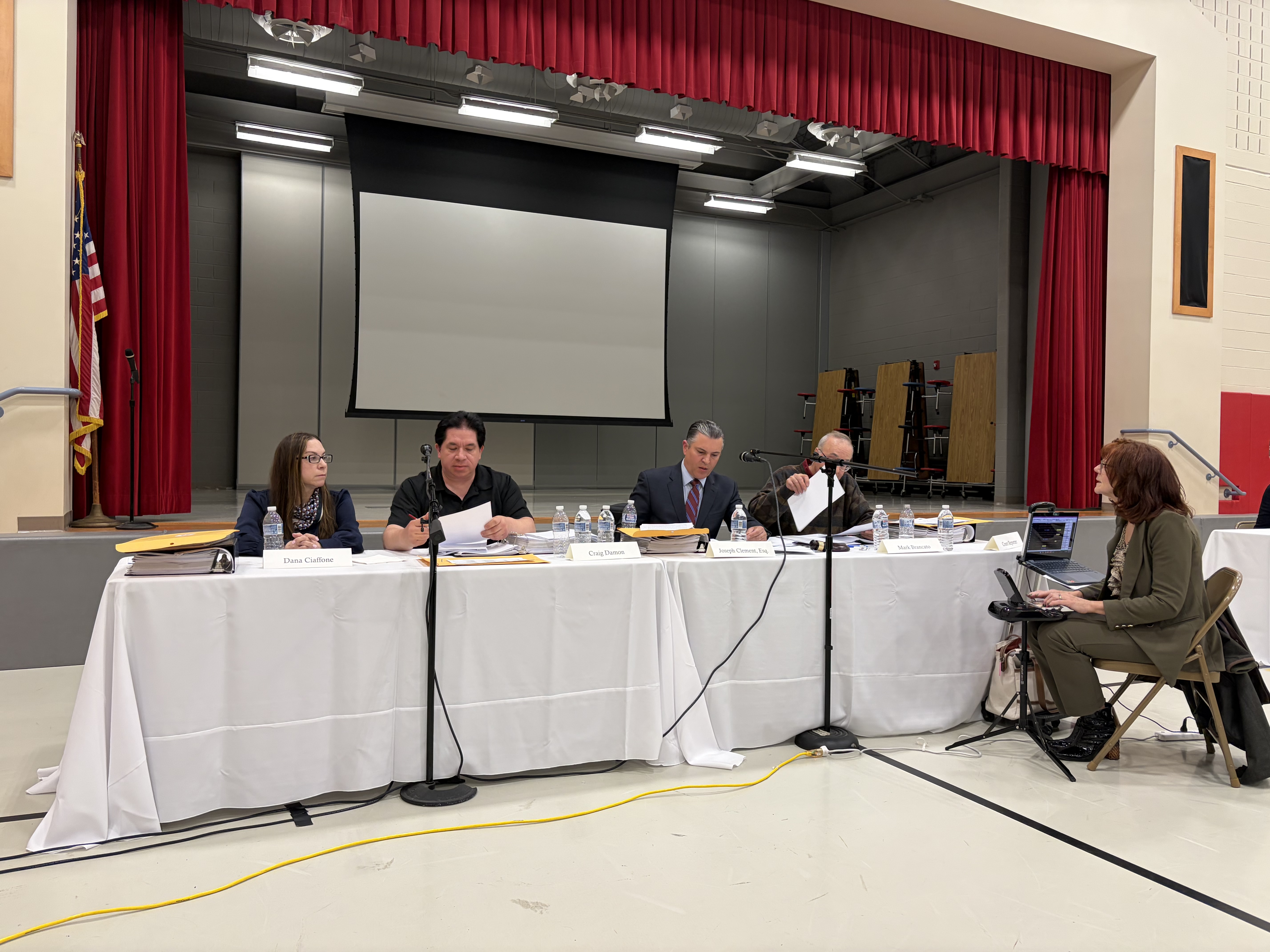
As the East Vincent Township Board of Supervisors voted on more than 30 applications late in the evening, many attendees grew frustrated by what they saw as a lack of transparency, as the board issued decisions without discussion or explanation.
Township Solicitor Joe Clement, who also served as hearing officer, said denials were based on whether applicants met the legal standard for party status, which generally requires showing both proximity and a direct, individualized impact. He emphasized that each request was evaluated on a case-by-case basis.
He added that the developer’s attorney objected to applicants beyond roughly 500 feet of the site, treating that distance as a threshold. The Board of Supervisors, however, did not formally adopt that standard and did not apply it uniformly
For many in attendance, that explanation did little to resolve the confusion.
Process Takes Center Stage
Early in the hearing, the board held an hour-long executive session to obtain legal advice on the party status applications, which supervisors were reviewing for the first time.
Applicants were then called forward one by one to provide additional context. But unlike a similar hearing held last week in Limerick — where applications were reviewed, discussed, and voted on individually — East Vincent officials deferred all decisions until the end.
That distinction did not go unnoticed.
Residents questioned why votes were not being made while applicants were still at the microphone, allowing for clarification in real time.
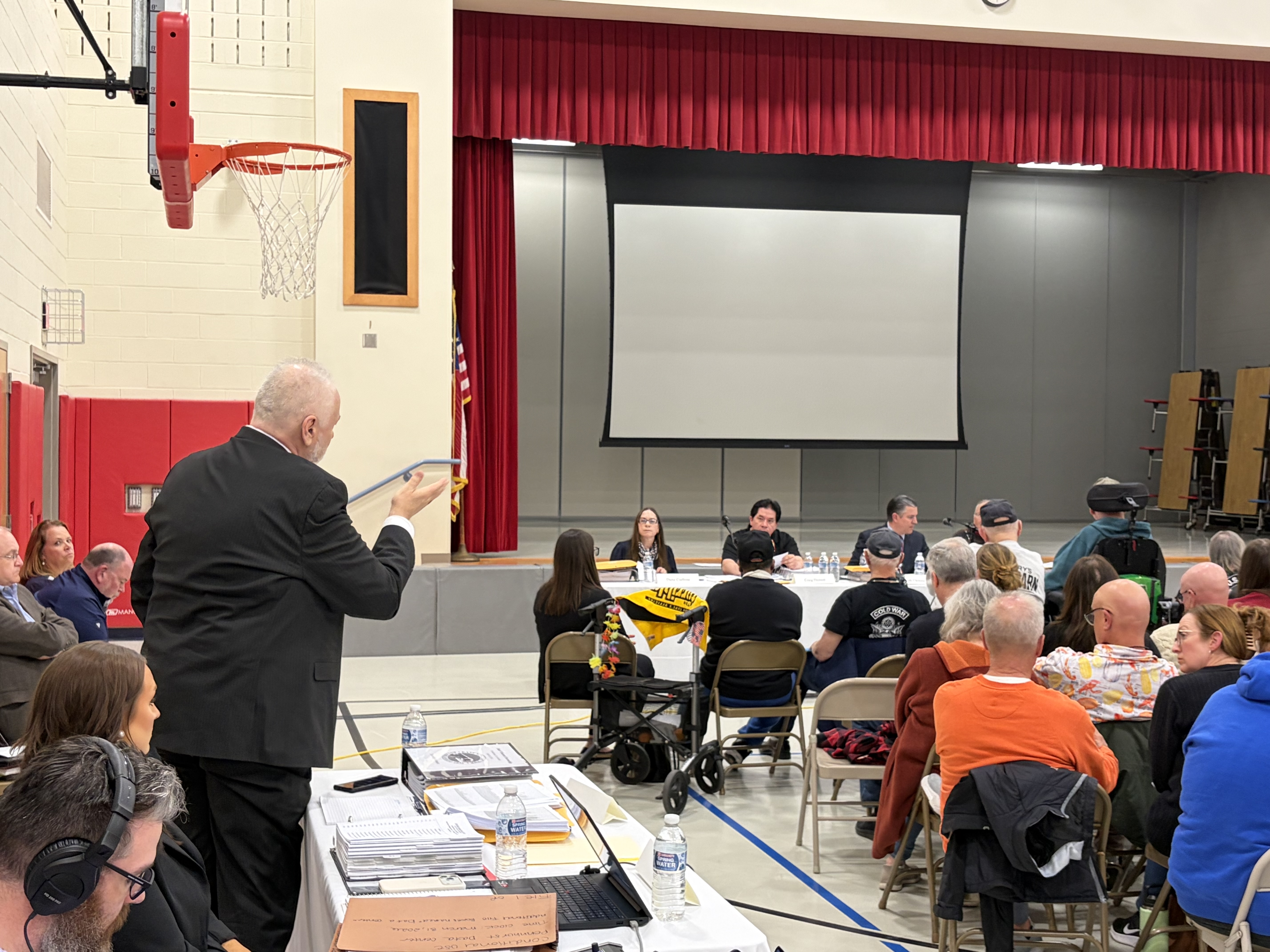
At one point, Township Manager Bob Zienkowski stood to urge Clement to reconsider the structure so decisions could be made more transparently. His comment drew applause from the audience.
Despite that request, the process remained unchanged.
Instead, decisions were reserved until later in the evening, leaving applicants uncertain of their status as they returned to their seats. Many formally objected on the record and stated their intent to appeal if denied.
Township Manager Bob Zienkowski stood to question the structure of the hearing.
Tensions Rise
Frustration with both the process and the proposal escalated as the night wore on.
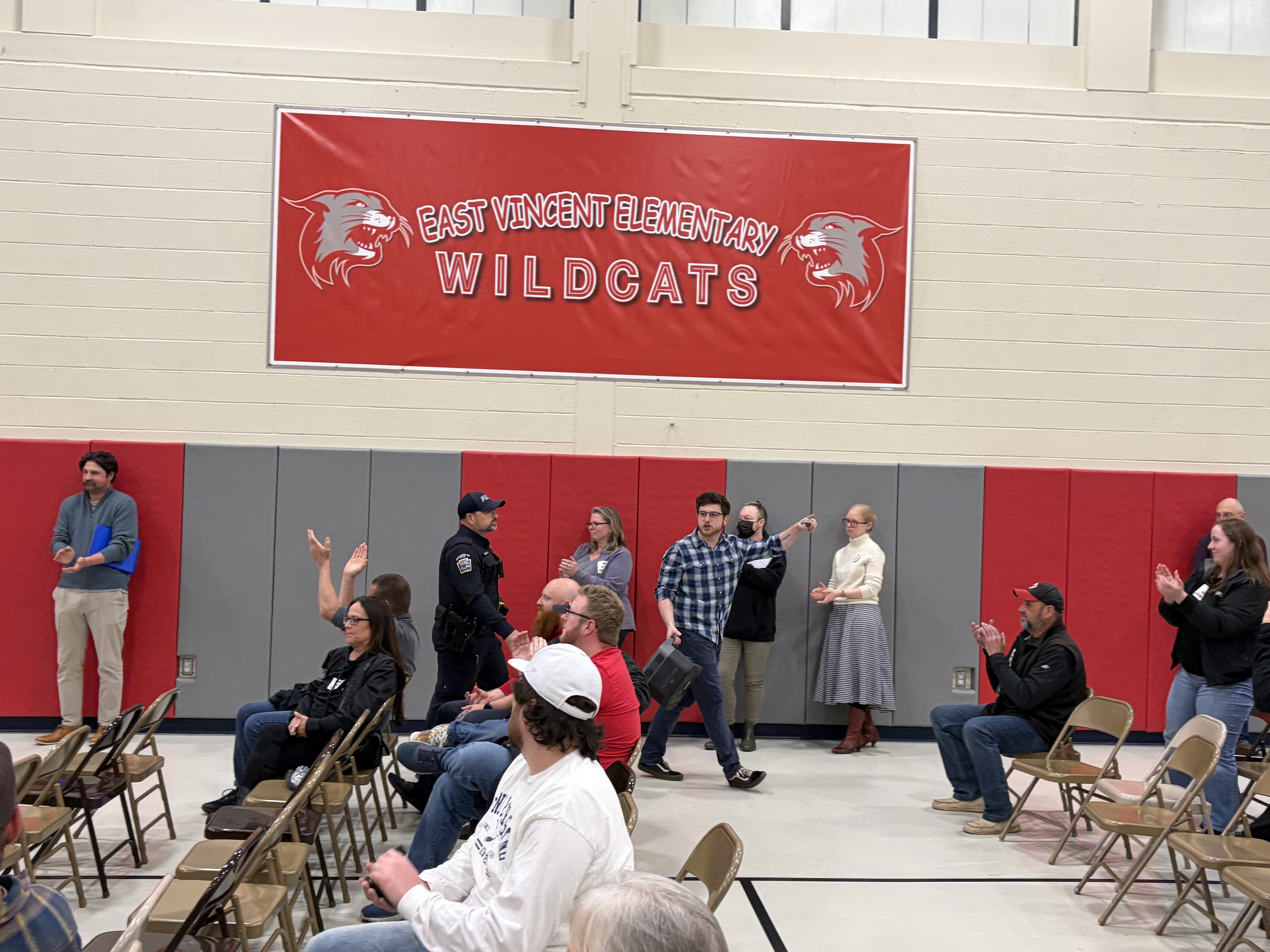
At one point, a vocal attendee associated with the media group The Lore Lodge, which was filming the proceedings, was removed by security after calling Supervisors Mark Brancato and Craig Damon “spineless, pathetic cowards.”
The outburst was one of several moments of visible tension, as audience reactions intensified during the board’s eventual votes.
A Divided Board
When decisions were finally issued, Supervisors Brancato and Damon supported the vast majority of party status denials.
Supervisor Dana Ciaffone frequently broke with her colleagues, voting against many of those denials — creating a clear divide on the three-member board.
Who Was Granted, Who Was Denied
Among those granted party status were:
A group of nearby residents represented by East Vincent Advocacy
Residents of the Southeastern Veterans’ Center
A representative of an organization operating at Pennhurst
Pamela and Steve Hacker of Brown Drive
Pamela Hacker, who lives 575 feet from the site, described what she called an already heavy industrial presence in the area. She highlighted the prospect of “a possible 200-plus generators,” citing concerns about noise, air pollution, and safety risks tied to natural gas infrastructure and battery storage.
Her husband, Steve, raised concerns about water use and emerging impacts such as heat islands, noting that residents continue to learn more about potential risks.
“This needs to be paused so we can learn about them,” he said.
A member of The Lore Lodge was escorted out of the hearing.
The majority of applicants, however, were denied party status.
Among them was Larry Schenk, an East Vincent resident who said his proximity — combined with decades of experience in IT and firefighting — gave him a unique perspective. He noted that he has worked in and built data centers.
“There are lots of life hazards. There are life hazards to the construction workers based on how these buildings are built. There are life hazards to the firefighters who will be called to these facilities,” he said, adding that he does not believe nearby emergency services “are prepared for something like that.”
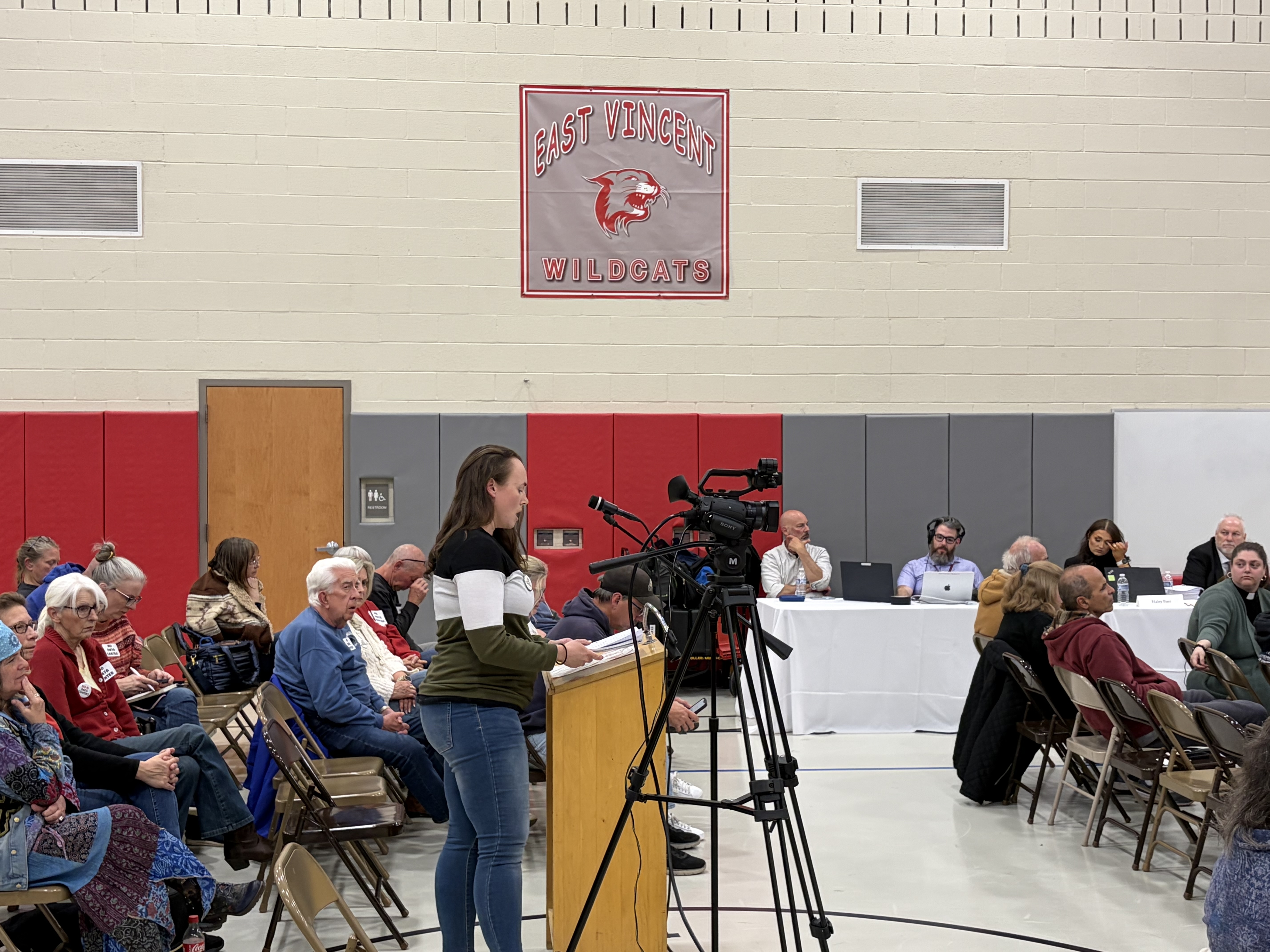
Becky Klinicki, another township resident denied party status, echoed many of the environmental concerns raised by others while also pointing to potential national security risks.
“These data centers are now a target in war. We already live near a nuclear power plant and we may have several of these centers around us five years in the future,” she said. “This puts a target on us even more so than we already have.”
East Vincent resident and Pennsylvania State Sen. Katie Muth, along with her husband Trevor Muth, argued that the project would have a direct and ongoing impact on their lives due to their work and daily presence in the area.
“This is my home. This is where I live. This is the township where I live. These are my neighbors,” Katie Muth said. “I'm not asking for standing based on a generalized interest in public policy or because I represent these fine people in this room. I'm asserting standing because I am personally and will continue to be repeatedly present in various impacted areas.”
The Muths were denied party status.
Before being denied party status, East Vincent resident Becky Klinicki voiced her concerns to township officials.
Residents Outline Concerns
As more than 30 applicants came forward, a consistent set of concerns emerged.
One woman spoke about the wildlife — rabbits, deer, and possums — that frequent her property and could be displaced.
Others focused on health.
One man described how his neurodivergent son, who has heightened sensitivity to sound, could be significantly affected by the constant low-frequency noise associated with data centers.
“Individuals with autism receive continuous mechanical noise as significantly more intense and arousing than neurotypical individuals,” he said. “And critically, they do not habituate to these sounds over time. This is not a problem that my son will get used to.”
Across dozens of speakers, concerns centered on:
Air quality and emissions
Water use and potential contamination
Noise and vibration
Public safety and emergency response readiness
Broader environmental impacts
Late-Night Statements
As the meeting approached its conclusion, representatives from the township’s Planning Commission and Environmental Advisory Council entered statements into the record.
Planning Commission Vice Chair Lawson Macartney noted that the developer’s representative did not attend either of the commission’s recent meetings — one earlier this month reviewing the current plan and another in February before revisions were made.
Planning Commissioner Nicole Keegan described what the commission called significant deficiencies in the application, including unanswered questions about environmental impacts, infrastructure demands, and zoning compatibility.
Environmental Advisory Council Chair Molly Wagle outlined concerns related to noise, air and water quality, and ecological disruption, emphasizing potential long-term impacts on residents and local ecosystems.
What Comes Next
By the end of the night, the board had not yet begun hearing testimony on the substance of the proposal.
The conditional use hearing is scheduled to continue on May 18 at East Vincent Elementary School, when proceedings are expected to move beyond procedural questions and into the merits of the application.
For many residents, Monday’s events left lingering concerns — not just about the project, but about the process used to evaluate it.
This article was generated with AI assistance. All content was reviewed, edited, and fact-checked by John McGuire.
The stenographer moved closer to the board toward the end of the night to hear officials over the crowd.