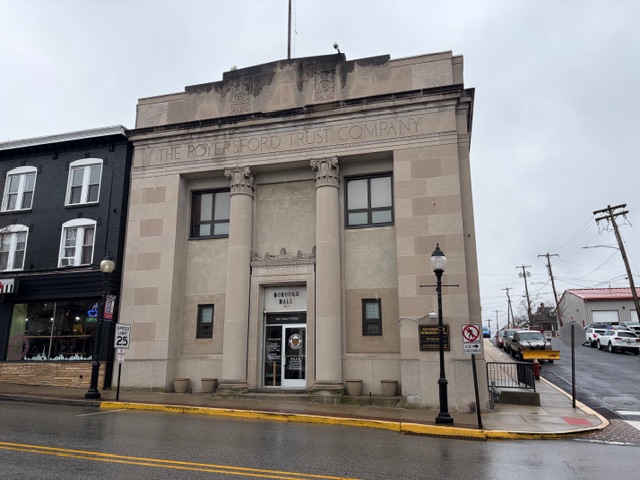
As interest in large-scale data center development grows across Pennsylvania, Royersford officials are examining what the trend could mean for the borough — even if such facilities are unlikely to be built within its borders.
During the Royersford Borough Council meeting on Tuesday, March 10, Mayor Alex Metricarti discussed insights from a regional workshop on data centers hosted earlier that day by Montgomery and Chester counties. The session focused on the rapid expansion of the facilities across the state and the challenges municipalities face in regulating them.
Metricarti said the topic has generated concern among members of the community, with some residents reaching out to borough leadership about potential development.
“I’ve had plenty of borough people message me about what we’re doing about the data centers,” the mayor told council.
While the facilities are being proposed in parts of the region, including nearby Limerick and East Vincent, Metricarti said Royersford itself is unlikely to attract a major data center because of land constraints. Many projects require large sites — often hundreds of acres — which are not readily available within the borough.
From what she learned at the workshop, Metricarti said typical data center developments range from roughly 200 to 500 acres or more, making them difficult to place in smaller municipalities like Royersford. Still, she emphasized the borough could feel indirect impacts if projects move forward elsewhere in the region.
A Growing Industry in Pennsylvania
According to information shared at the workshop, Pennsylvania has become a prime location for data center construction, largely due to its energy resources. Metricarti said the state’s natural gas production is a key factor attracting developers.
“We have the third highest number of data centers behind Northern Virginia and Texas,” she told council.
Developers are drawn to areas close to energy sources because data centers require enormous amounts of electricity to operate servers and cooling systems. Access to natural gas and power infrastructure can significantly reduce operating costs.
However, that same reliance on fossil fuels raises environmental concerns, such as potential air quality impacts tied to natural-gas generation used to power some data centers.
“That creates a huge problem for air quality,” she said, noting that increased emissions could affect public health in surrounding communities.
Local Benefits, Regional Costs
One of the key themes discussed at the workshop was how the economic benefits of data centers can be unevenly distributed.
Metricarti said municipalities that host the facilities may see increased tax revenue, particularly if development replaces a vacant industrial property or brownfield site.
But broader impacts, including environmental effects, can extend beyond the host municipality. Borough officials noted that even if Royersford does not host a facility, it could still experience indirect effects through regional energy systems or environmental changes.