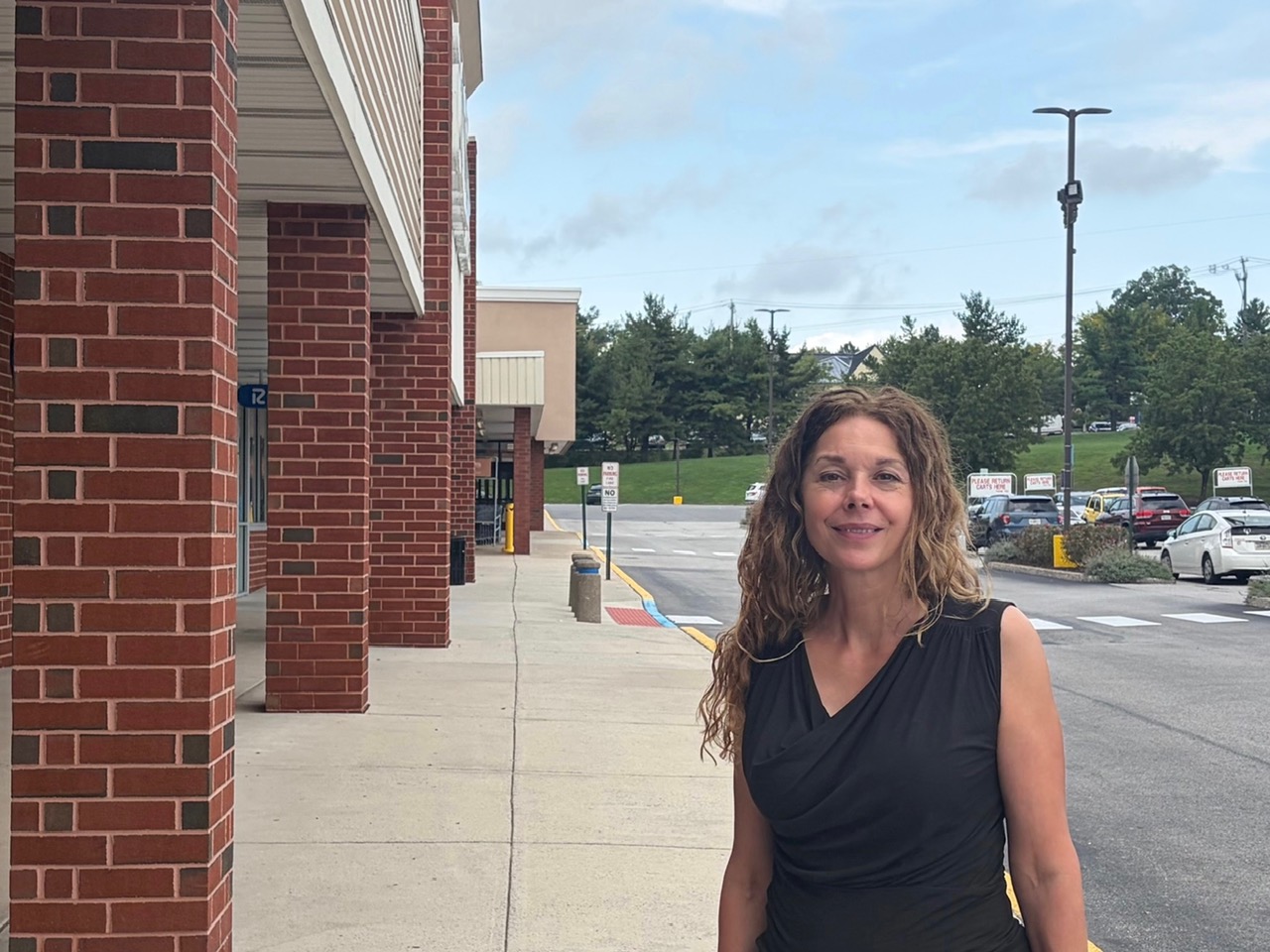
For Melissa Dicranian, the Republican candidate for Pennsylvania’s 44th State Senate District, her campaign is centered on a broad economic argument: Pennsylvania should produce more energy, make it easier to operate and start businesses, expand manufacturing and workforce opportunities, and reduce costs that she believes are making it harder for residents to prosper.
Dicranian is challenging Democratic State Sen. Katie Muth, the incumbent representing District 44. The district spans portions of Berks, Chester, and Montgomery counties and locally includes East Pikeland, East Vincent, Phoenixville, Schuylkill Township, Spring City, Royersford, and Upper Providence, among other communities.
The general election is Tuesday, November 3.
Dicranian, who has a background in building construction and design, lives on a 47-acre historic equestrian property in Charlestown Township. During an interview with The Press at Pilão Brazilian Eatery in Phoenixville, she said that restoring and maintaining her property, raising her family there, and becoming involved in community activities helped shape her views on land use, conservation, and government. She has also previously run for state representative.
The following interview has been edited for clarity and brevity.
The Press: What would you describe as the main focus of your campaign?
Melissa Dicranian: I’m running to bring our economy up, open up our energy, and skill up our workforce. We have too much taxation and regulation. We need our people to be able to work and be productive and be prosperous.
Where we are on affordability is really tearing us apart. Pennsylvania is an energy-producing state, and I think we should be doing much better economically because of that.
My approach is planning and solutions: How do you build community? How do you create opportunity? I think government should be creating the platform where people and businesses can succeed.
The Press: What would you like to see Pennsylvania do differently on energy?
Dicranian: Open up our natural resources and bring up production, particularly natural gas production.
We have the resources here. I think we have fallen behind where we need to be in bringing new generation online, and increasing production is part of making energy more affordable.
Energy connects to almost everything else I’m talking about. If we have affordable and reliable energy, that helps manufacturers. It helps businesses. It helps families. We need to take the resources we have in Pennsylvania and use them to help build our economy.
The Press: Data centers have become a major issue throughout this area. How do you approach them?
Dicranian: We are in what I would call a curative period, where municipalities need time to establish complex regulation in their zoning, understand what these facilities mean, and hear the voices of the people.
I don’t believe a complete three-year statewide moratorium is where we need to be. There may be communities elsewhere in Pennsylvania, particularly places with brownfields or areas looking for investment, that decide a data center makes sense for them.
But around here, I think we have to be very careful. These projects are very large, and you cannot make a mistake with something that big because the community may not be able to recover from it.
Data centers are required to bring their own power and transmission rather than simply creating additional pressure on existing infrastructure. This power requirement plan must be clearly defined upfront.
And every data center is different. That is important. I think some of what is happening right now is too big, too fast.
The Press: How does farmland preservation fit into your concerns about development and data centers?
Dicranian: I’m a Pennsylvania Farm Bureau legislative member, and farmland is always one of the first things people look at when they need a large amount of open land.
It isn’t only the data center itself. It can be the transmission lines and other infrastructure that comes with development.
People sometimes look at a farm and just see acreage. They don’t see all the value that is in the ground — the years the soil has been worked, the investment in equipment, and everything the farmer has done to make that land productive.
I would also want to look at what happens at the end of the useful life of a large project. If you develop a large amount of land and eventually no longer need all of it, who pays to restore it? I think that responsibility needs to be considered upfront rather than eventually falling on the property owner or the community.
The Press: You’ve talked frequently about bringing manufacturing back to Pennsylvania. What would that look like?
Dicranian: Pennsylvania used to be a manufacturing powerhouse. We have energy, we have a workforce, and we have people willing to invest here.
I think we have to say we’re open for business and serious about it. That means looking at redundant regulations, taxation, the corporate net income tax, and how Pennsylvania handles net operating losses.
Once investment starts moving, other investment follows.
Here in southeastern Pennsylvania, I also think life sciences and medical manufacturing are an obvious opportunity. We already have a strong life-sciences presence. Why wouldn’t we build on what we already have?
Manufacturing creates a lot of different jobs, including good-paying jobs that can sustain families. My thinking is that Pennsylvania energy and Pennsylvania workers can help manufacture our future. If we make more here and buy more of what we make here, more of that money stays in our communities.
The Press: Where do small businesses and young workers fit into that strategy?
Dicranian: We should make it easier for people to take the risk of starting a business.
I also think we need to expand the way we talk to young people about their futures. College is one path, but it is not the only path.
Maybe somebody has spent four years working for a small business and understands that business. Maybe they want to start their own company. Maybe they want to take over a family business. Maybe they want to become a partner in a business or go into a skilled trade.
We need to let young people know that not going to college does not mean they aren’t starting their future.
I would like to see more practical education around entrepreneurship and much stronger access to career and technical training. I also think community college needs to be genuinely affordable. People should be able to learn the skills they need without taking on an enormous financial burden.
The Press: How do you connect those economic policies to the broader affordability issue?
Dicranian: Everything gets layered into the final cost of living.
Energy costs go into housing, goods, and transportation. Insurance costs go into operating a business. Regulations have costs. Litigation has costs. Taxes have costs.
I think sometimes government looks at one policy in isolation without looking at what all of those layers do when you put them together.
My concern with something like a $15 minimum wage, for example, is what happens to a business that has already lost money for two years and suddenly has another mandated cost. Does it reduce employees? Does it close? Does it move somewhere else?
We need legislation that is people-centric, business-centric, and economy-centric, and that looks at the cause of a problem instead of assuming government spending is always the solution.
Government needs to work within its resources just as families and businesses do. To me, that is part of putting people first.
The Press: What concerns do you have about healthcare in the district?
Dicranian: We’re paying for health insurance, we have healthcare workers, and yet we have communities where people are worried about whether they can get to a hospital when they need one.
I think we need to look seriously at why hospitals are failing and at models that are working.
I’m interested in approaches that use data and keep reassessing what is working instead of saying every patient or every hospital has to fit into exactly the same process.
At the state level, I think we should promote successful ideas when we see them and look at how community hospitals can remain viable and connected to the people they serve.
The Press: Education was another issue you said you feel strongly about. What would you like to change?
Dicranian: The school system is the foundation of our future, the foundation of our economy, and the foundation of everything we are working for.
We need standards for what students are expected to learn and what they should be able to do when they leave school. All those children sitting in the classroom, we owe that to them.
I don’t think simply raising taxes is the answer. I think we need to look at what has been successful elsewhere, bring people together, and work toward solutions.
I also think we have to value different kinds of learning. Art classes, hands-on classes, career education — those are places where children can discover abilities that may not show up on a traditional test.
You may have a student who struggles in one setting but is incredible at building something, working with measurements, or thinking three-dimensionally. You have to create opportunities for that child to discover it and for other students to see it too.
The Press: How would you describe yourself politically?
Dicranian: I’m definitely a conservative.
For me, that means conserving resources for what they need to be used for. I’m always thinking about need and resources.
I’m not for tax-and-spend government. I think opportunity should be the platform, and government should be making that platform.
But I also think bipartisanship is huge. Different areas of Pennsylvania have different needs. Republicans and Democrats have to be able to sit down and say, “What do your people need? What do our people need? What will we do together?”
In a business, Republicans, Democrats, and independents all have to work together. Government should be able to do the same thing.
You can’t judge somebody simply by what they are registered to vote as. They’re a person, and people are complex.
The Press: What does the “People First” theme of your campaign mean to you?
Dicranian: It came out of my experience running for office.
The more I’ve been with people, the more I’ve learned. Running before and not being elected was not a loss to me. It made me better because I stayed involved, kept talking to people, and kept trying to understand what they need.
For me, “People First” comes down to a basic idea: the government serves the people.
We need our economy to work. We need people to be prosperous. We need people to have opportunities. That’s why I’m running.