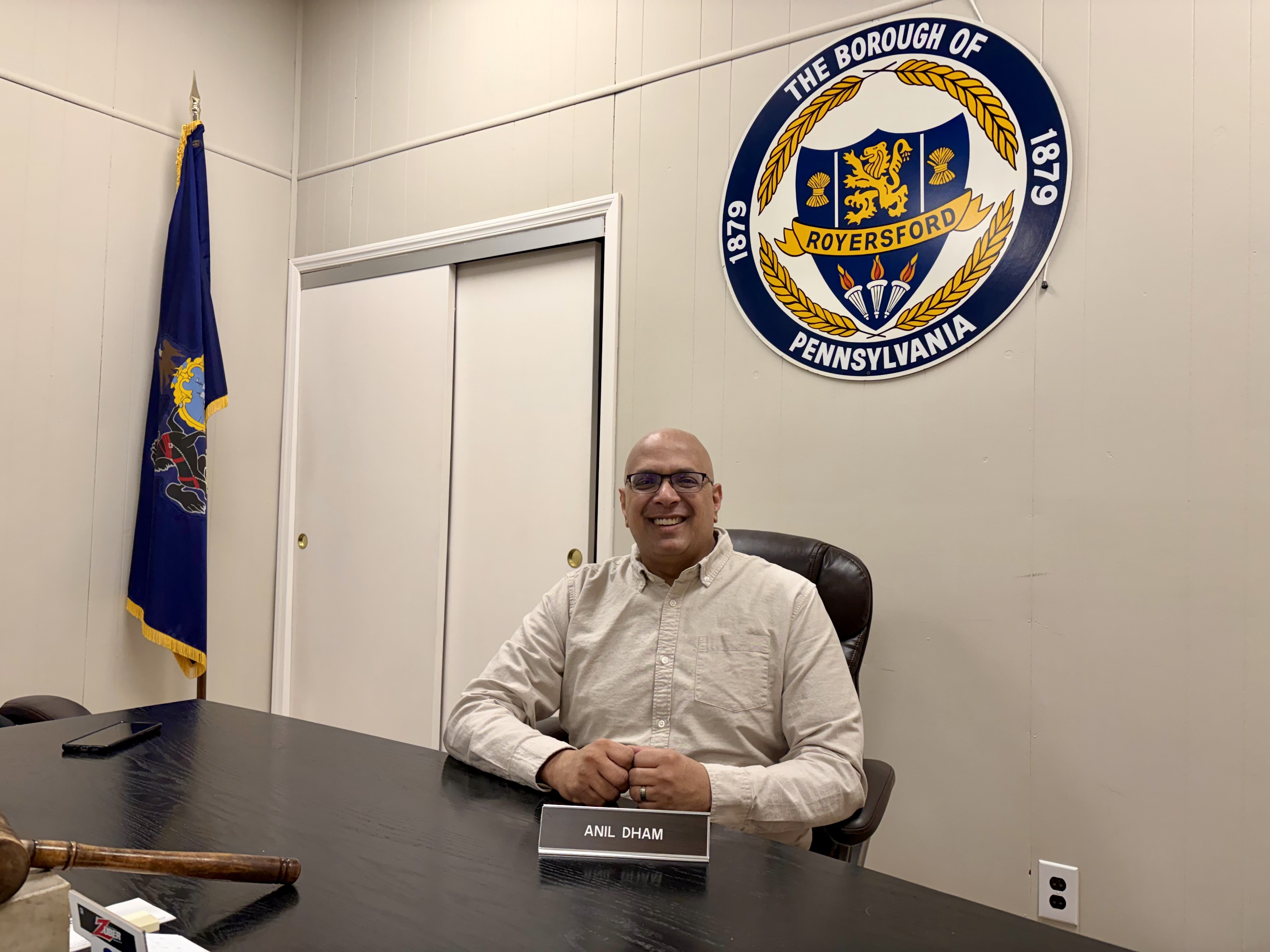
Royersford Borough Council President Anil Dham recently sat down with Spring-Ford Press to discuss the borough’s growth over the past decade, the priorities shaping local government today, and what may lie ahead for the community.
Dham was first elected to borough council in 2014 and has served as council president since 2016. During that time, Royersford has seen new restaurants and businesses open along Main Street, expanded community events, and continued investment in parks, infrastructure, and public spaces.
During the conversation at Royersford Borough Hall, Dham reflected on the borough’s progress and the businesses that have helped shape it. At one point, he joked that naming favorites felt unfair because he wished he could highlight every business in town.
This conversation has been edited for clarity and brevity.
Spring-Ford Press: Main Street has changed quite a bit since you first joined Borough Council. What role do you think council has played in that transformation?
Dham: When I first joined council, a lot of storefronts were empty. The old furniture store had closed, and there weren’t many places to go out at night. My wife and I would often go to Phoenixville because that’s where things were happening. It didn’t feel great leaving town to spend money somewhere else.
So the idea became: why can’t Royersford be a place where people can walk to restaurants, spend time, and support businesses right in their own community?
One of the biggest things we did early on was develop a comprehensive plan. It had been 20 or 30 years since the last one. That plan became the blueprint for where the borough wanted to go, and it’s also been extremely helpful for securing grants. In the past 10 years, we’ve received close to $7 million in grant funding.
Spring-Ford Press: How did the comprehensive plan shape the borough’s priorities?
Dham: We formed a committee made up mostly of residents and business owners, along with some people from the planning commission and council. They surveyed residents and gathered feedback about what people wanted.
The big themes were creating a more walkable community, improving parks and recreation, and enhancing public safety. Since then, we’ve added officers to the police department and invested in parks and community events. We’ve really tried to follow the direction that residents laid out in that plan.
Spring-Ford Press: Some residents worry about Royersford becoming too much like Phoenixville. How do you think about that concern?
Dham: We’ve said from the beginning that we don’t want to be Phoenixville, but we also don’t want to be what Royersford was 15 years ago.
Phoenixville tends to attract more single professionals or empty nesters looking for a more urban lifestyle. Royersford still has a lot of families and multi-generational residents. What we’ve tried to do is keep Royersford affordable while making it a nicer place to live.
Along the Route 422 corridor, there may be places that are nicer or places that are cheaper. But there aren’t many places that are both nice and affordable like Royersford.
Spring-Ford Press: What are some projects or improvements happening in the borough right now?
Dham: We’re always trying to take advantage of grants and outside funding whenever possible. If there’s money available to improve the town, we should be going after it.
This year we’re doing several road and infrastructure projects using state and federal funds. That includes improvements along Spruce Street, Walnut Street, North 9th Avenue, and Elm Street.
We’re also continuing upgrades at Victory Park. Plans include making parts of the park more ADA accessible, installing new benches and picnic tables, extending the walking trail, resurfacing the stage, and replacing playground equipment.
Spring-Ford Press: There seems to be a big focus on parks and recreation.
Dham: Definitely. Our Parks and Recreation volunteers deserve a lot of credit for bringing many of our events to life and continuing to come up with new ideas for the community.
Victory Park has also been improved in phases over the years, and it looks very different today than it did a decade ago.
One example is the farmers market. That idea came directly from the comprehensive plan. It wasn’t something that was even on my radar initially, but residents said they wanted it. Now it’s been running for several years and has become a popular part of the community.
Spring-Ford Press: Downtown has also seen a number of new businesses recently.
Dham: Yes, we’ve had several open in the past few months. The Ivy House building on Main Street, which had been empty for decades, was renovated and turned into small office spaces. It’s now fully occupied by businesses like a home healthcare agency, hair salons, a barbershop, and an esthetician. The idea is to create spaces where smaller businesses can operate—sometimes in spaces as small as 180 to 240 square feet—which might not exist elsewhere.
At Royersford Commons, businesses like Ulew Cafe and Fresh Monkee have opened. We’ve also seen new additions like a tattoo studio, the Mexican restaurant El Palenque, and other small businesses.