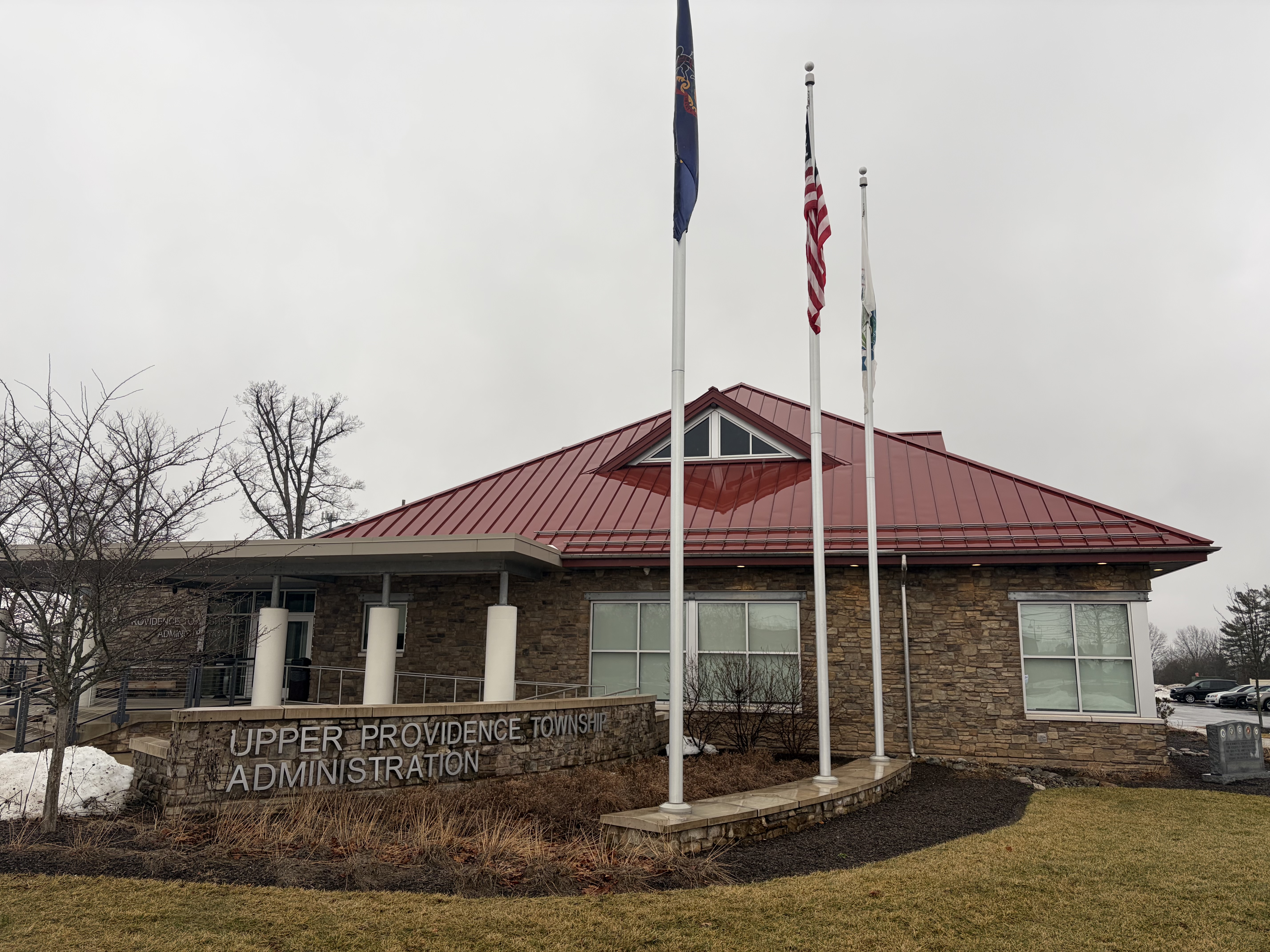
Upper Providence Township is proposing a property tax increase for 2027 as officials look to strengthen fire and emergency services, address staffing challenges, and prepare for future equipment purchases.
Following a series of budget workshops with the board of supervisors, Township Manager Tim Tieperman presented a preliminary budget during the board's meeting on Monday, November 16. The proposal would increase the township's combined property tax rate from 2.75 mills to 3.65 mills, an increase of 0.9 mills, or approximately 32.7 percent.
For a property assessed at $100,000, the increase would amount to an additional $90 annually in township property taxes. The actual impact on homeowners would depend on their property's assessed value, which differs from its market value.
The increase would help fund additional career firefighters and prepare for the purchase of a ladder truck, among other municipal expenses.
Supervisors voted to advertise the preliminary budget, beginning the required 20-day public review period ahead of anticipated final adoption on December 7.
Fire Services Study Identifies Staffing and Equipment Needs
Before the budget presentation, supervisors heard the findings of a comprehensive fire services study conducted by the Center for Public Safety Management (CPSM).
CPSM representative Peter Finley described Upper Providence's fire department as highly professional and well-managed, praising its leadership, modern facilities, equipment, training programs, and regional partnerships.
However, the study identified growing staffing and equipment needs as the township continues to develop.
One recommendation is to increase minimum staffing on the township's primary fire apparatus from three firefighters to four. Finley explained that a four-person crew would allow two firefighters to enter a hazardous environment while two remain outside to provide assistance and rescue if necessary.
The study also recommends purchasing a ladder truck to address the growing number of multistory buildings. According to Finley, Upper Providence has 23 buildings exceeding three stories, with nine more in various stages of planning or approval.
The township currently relies primarily on ladder trucks from Trappe and Royersford, with additional assistance available from Phoenixville. Finley noted that Trappe's ladder truck is about 25 years old and approaching the end of its recommended service life.
CPSM recommended purchasing a township ladder truck, which could take 36 to 48 months to obtain, and adding 12 career firefighters over four years to provide a four-person crew for each shift. The goal is to have sufficient staffing available to operate the truck when it enters service around 2030 or 2031.
Volunteer Firefighter Availability Raises Concerns
The study also examined volunteer fire companies, particularly Black Rock Volunteer Fire Company, which has historically served Upper Providence.
Finley said declining volunteer participation across Pennsylvania has made consistent emergency responses increasingly difficult. According to the study, Black Rock was unable to respond to approximately 47 percent of the incidents to which it was dispatched in Upper Providence during the first nine months of 2026.
The company also averaged 1.1 firefighters qualified to perform interior structural firefighting per incident, down from 2.1 two years earlier.
Finley emphasized that volunteer companies remain valuable but cannot be relied upon as a guaranteed source of emergency personnel.
Among CPSM's 42 recommendations are establishing performance benchmarks for Black Rock, reconsidering the automatic dispatch of neighboring volunteer companies to lower-priority incidents, and redirecting township funding toward volunteer recruitment and retention.
The study recommends reallocating about $92,000 in annual funding currently provided to Black Rock, including $40,000 toward a recruitment and retention position and $52,000 for volunteer incentives.
These recommendations remain under consideration. The study was presented in draft form and will undergo further review before finalization.
Proposed Budget Begins Implementing Recommendations
The proposed 2027 budget includes funding for three additional career firefighters, a volunteer recruitment and retention specialist, and the conversion of a part-time fire department administrative assistant position to full-time.
The fire department's proposed appropriation is approximately $4.47 million, an increase of nearly 15 percent over its 2026 authorized budget.
The township plans to add three career firefighters annually through 2030, for a total of 12 new positions, subject to future budget approvals.
The proposed budget would also consolidate the township's general-purpose and fire property tax levies, giving officials greater flexibility in allocating funds while continuing to track fire department spending separately.
Under the new structure, 3.35 mills would support the general fund, including fire services, while the existing 0.3-mill emergency medical services levy would remain unchanged.
The proposed tax increase would allow the township to contribute about $673,760 in additional funding to reserves.
The budget also includes $575,000 toward a future ladder truck, estimated to cost $2.3 million, and $97,750 in equipment replacement assessments. Together, these allocations would provide roughly $1.35 million in reserve contributions for 2027.
The township intends to build reserves for future capital expenses while developing a sustainable funding plan for the recurring salaries and benefits of additional firefighters.
Other Budget Priorities
The preliminary budget includes nearly $50.41 million in gross financing and planned allocations across all township funds, including $25.18 million in the general fund.
Tieperman emphasized that the $50.41 million figure includes transfers between funds and reserve allocations, not just direct municipal spending.
Police services remain the township's largest general fund expense, with approximately $8.53 million proposed for 2027.
The police budget would increase by about 9.4 percent, largely because of existing personnel obligations, including a roughly $471,000 increase in pension costs. The proposed budget excludes a requested additional police officer, which Tieperman recommended deferring for consideration in 2028.
The township also proposes establishing dedicated capital equipment replacement and debt service funds to better manage long-term expenses.
A new stormwater management fund would receive $500,000 in initial funding, including $260,000 for repairs and $240,000 for operating and engineering expenses. No new stormwater fee is proposed for 2027.
Tieperman said the proposed financial restructuring is intended to improve transparency and make future expenses more predictable.
Budget Moves to Public Review
Supervisors approved advertising the proposed budget, beginning the required 20-day public review period. The budget is available on the township's website and remains subject to revision as officials review revenue estimates, personnel costs, capital needs, and the long-term financial implications of expanding the fire department.
The board is expected to consider final adoption of the budget and associated property tax increase on December 7.