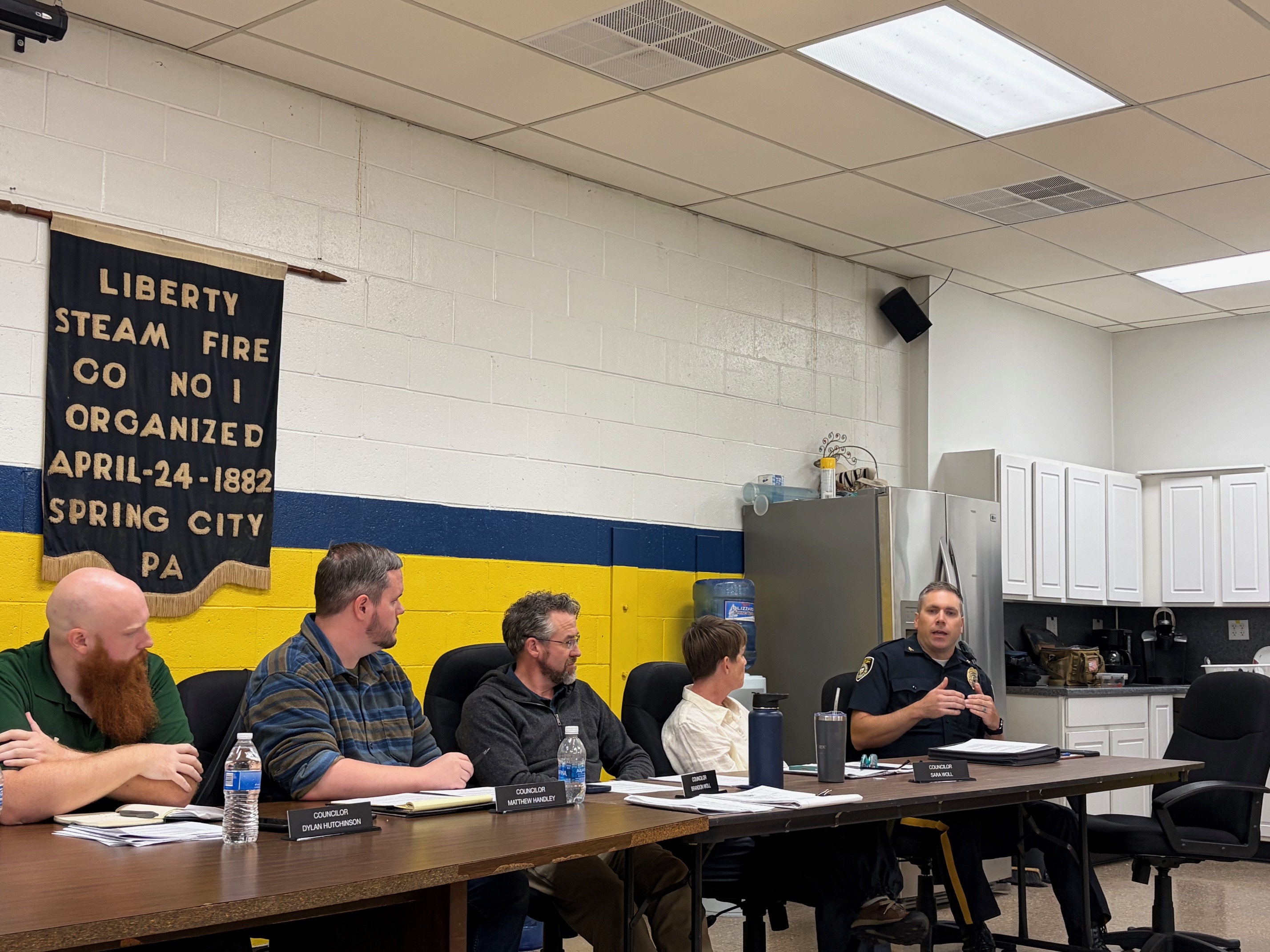
Spring City Borough Council on Monday directed its solicitor to research whether the borough could adopt an ordinance banning stationary automatic license plate reader cameras, including cameras placed on private property.
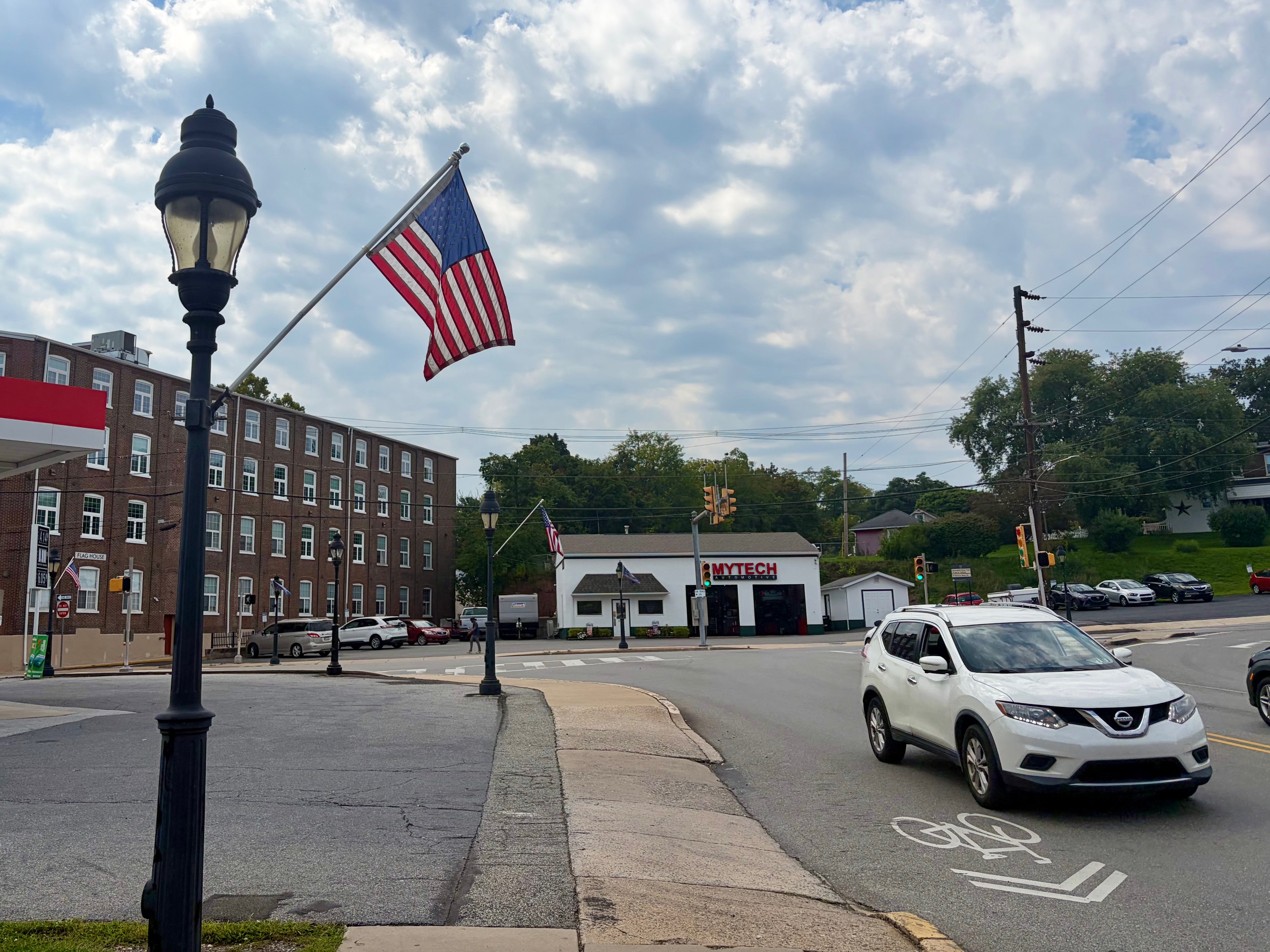
The discussion followed earlier efforts by the police department to explore pricing for a stationary reader near Bridge and Main streets, where the borough's only traffic light is located. Police Chief Ryan White said the possibility was discussed at the September emergency services committee meeting and described the intersection as the borough's busiest.
White said automatic license plate readers can aid investigations involving stolen vehicles, thefts, and assaults by capturing license plates and checking them against databases, including the National Crime Information Center and a PennDOT list of expired and suspended registrations.
White said the department had looked into VIPR rather than the larger company Flock because many existing cameras in the region already use the VIPR system. Chester County has provided Spring City police with access to that network, even though no VIPR cameras are located in the borough.
He cited one theft case earlier this year in which information from the camera network helped police identify a vehicle and, through further investigation, a suspect.
Privacy and Data Concerns
Several council members raised objections to installing a stationary reader.
Councilor Dylan Hutchinson said he was "a hard no" on the idea, arguing that the potential drawbacks outweighed the benefits. He cited outside reporting about abuses of similar systems, including officers accused of using data to stalk former partners, and raised concerns about data storage, facial recognition development, and the possibility that vendors could sharply increase prices after municipalities became dependent on their software.
Hutchinson also described VIPR as a small company based in Exton and questioned who could ultimately have access to data collected through the system.
Councilor Matt Handley said stationary readers photograph every vehicle that passes a camera, rather than only vehicles already under investigation. He also tied the technology to the growing demand for data processing, arguing that the large volume of images collected by the cameras contributes to the need for AI data centers.
“Every one of these cameras has to take 10,000 high-resolution pictures every day, and they can only do that by plopping down AI data centers to process these cameras,” Handley said.
Handley also referenced an investigation by the West Chester Chronicle into VIPR and characterized the company as a lower-cost version of Flock.
Councilor Brandon Woll said his primary concern was the mass collection and sharing of data. He said he trusted the Spring City Police Department but worried about the broader infrastructure such systems could create and how collected information could potentially be used by outside agencies in the future.
Distinction From In-Car Cameras
White drew a distinction between stationary readers and license plate readers already integrated into the department's in-car camera system.
The in-car readers are part of an Axon platform that also includes the department's body cameras and dash cameras. White said information collected through that system belongs to the Spring City Police Department and is not viewable by other police departments or agencies without the borough's permission.
Officers are required to enter an investigative reason or case number when accessing the information, White said, creating an auditable record of how the system is used. The department currently retains the data for 90 days.
White also said Axon states that its system does not detect facial images, gender, or race. It records plate text, a vehicle image, date, time, and location.
Mayor Adam Alberico emphasized that he did not want the borough's existing in-car readers removed. Council members clarified that the discussion — and the motion that followed — applied only to stationary license plate readers.
Legal Questions Remain Unsettled
Borough Solicitor Matthew Hovey said the legality of widespread license plate reader surveillance remains an emerging issue.
Hovey pointed to a recent federal court ruling in Oklahoma in which a judge found that a police officer violated the Fourth Amendment by using automated license plate reader databases without a warrant to reconstruct a driver's travel history.
He noted that the broader legality of new surveillance technology remains unsettled and the issue could eventually reach higher courts.
Hovey also said borough council maintains authority over contracts and spending for any camera system and controls equipment placed within borough rights-of-way or on borough-controlled poles.
The question of whether Spring City could prohibit stationary readers on private property would require additional legal research, he said.
Hutchinson ultimately moved to authorize the solicitor to begin researching an ordinance banning stationary license plate readers, mentioning systems including Flock, VIPR, and Axon.
The motion passed 5-1, with Councilor Rick Pennypacker voting no. Council Vice President Chris Yocum was not present at Monday’s meeting.
Pennypacker said he believed the matter should first return to either the emergency services committee or the finance and ordinance committee before coming back to council.
During the discussion, Hovey said he could return to council with a menu of options after researching the technology and the borough's legal authority.