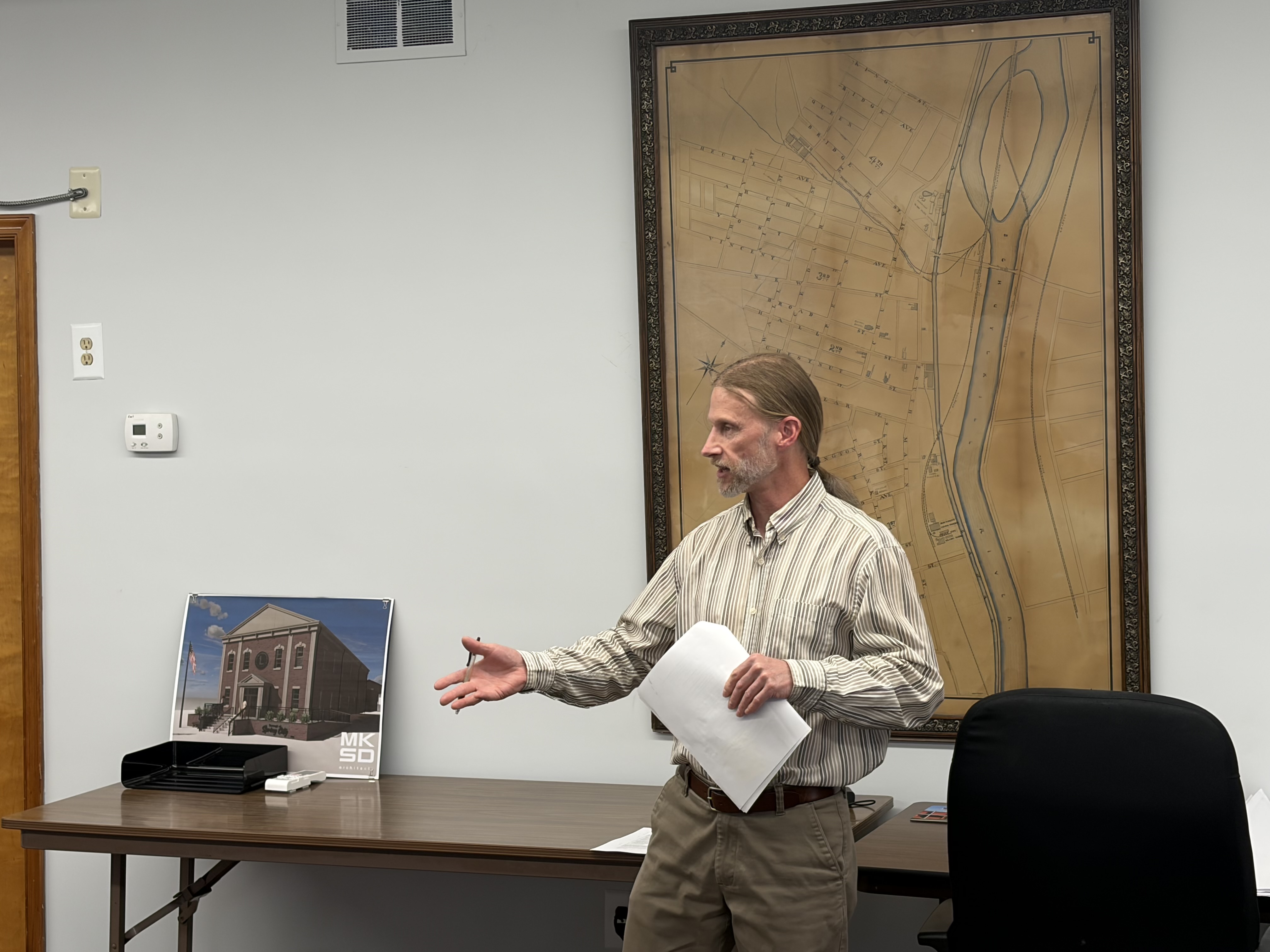
Spring City is preparing to update its comprehensive plan for the first time in more than three decades, borough officials confirmed at Monday’s council meeting during a presentation from the Chester County Planning Commission.
The borough's existing plan dates to 1992 — a document that, while described as having held up reasonably well, predates smartphones, the COVID-19 pandemic, and significant shifts in how communities think about land use, housing, and public services.
What Is a Comprehensive Plan, and Why Does It Matter?
Kevin Myers, representing the Chester County Planning Commission, appeared before council to explain what a comprehensive plan is and why updating it matters for Spring City residents.
Under Pennsylvania’s Municipalities Planning Code, municipalities are required to review their comprehensive plan at least every 10 years. The plan itself is not a regulatory document, but it provides a policy framework that guides zoning ordinances and other land use decisions. In practice, it informs where different types of development are encouraged, how land is planned for residential or commercial use, and how public infrastructure priorities are identified, while zoning ordinances ultimately determine what is permitted.
"Think of a comprehensive plan as an oil change for your community," Myers told council, noting that it keeps things current and helps ensure decisions are guided by up-to-date information.
Myers noted that Spring City's 1992 plan was written with the help of a Chester County planner who has remained on staff. He described it as a relatively forward-thinking document for its time. Borough Manager Kisha Tyler confirmed that the borough has implemented most of what the plan recommended, even though the document had sat on the shelf under the borough’s prior administration.
"We weren't ignoring the plan. Things were still getting done," she told council. "We're looking forward to updating it and finding out how far we've come and where we can go."
A More Focused, Readable Approach
Myers described a shift in how comprehensive plans are written today. Rather than producing lengthy documents organized around exhaustive chapter-by-chapter subject coverage, the planning commission now favors what it calls an implementable plan — one that focuses on five or so priority areas most relevant to a community, while still meeting the legal requirements of the planning code.
"I'm guilty of writing big long plans with lots of words and no pictures that are too wordy and no one wants to read," Myers acknowledged. The newer model, he said, zeroes in on what residents actually care about while still checking all required boxes.
Topics that must be addressed under state law include land use, natural resources, historic resources, and community facilities and services, among others. But a community that doesn't prioritize historic preservation, for example, doesn't need to dedicate an entire chapter to it.
Zoning, Grants, and the Real-World Stakes
The update carries practical implications beyond policy. Myers emphasized that many state and federal grant programs require applicants to demonstrate a connection to an adopted comprehensive plan. An outdated or misaligned plan can complicate funding applications.
The plan also provides the basis for future zoning updates. Myers explained that while the comprehensive plan sets policy direction, zoning ordinances implement those policies. Municipalities are expected to keep the two generally consistent, updating zoning as needed.
Myers also introduced the concept of an official map — a separate ordinance that allows municipalities to designate land for future public uses like parks, roads, or infrastructure. If a property owner later seeks to sell or subdivide land flagged on the official map, the borough would have a right of first refusal to purchase it at a negotiated price for a period of time.
Timeline and Community Involvement
The process is expected to take roughly 12 to 18 months, though the planning commission's standard contract runs two years to account for the formal adoption process required under state law. Myers said the goal would be to begin scoping the work in the fourth quarter of 2026, with active work launching in early 2027.
"You don't really want to start a comprehensive planning effort in the middle of the summer," Myers noted. "People are busy. They're at the shore. It's not the best time to kick things off."
The process will involve public engagement at multiple stages — including open houses at the beginning and end of the drafting period — as well as surveys and meetings with stakeholder groups such as business owners, civic organizations, and emergency services. The borough’s planning commission is expected to lead the guiding committee, though council can also appoint additional community members.
No formal vote was taken at the meeting. The comprehensive plan update has been budgeted as a 2027 project.
This article was generated with AI assistance. All content was reviewed, edited, and fact-checked by John McGuire.