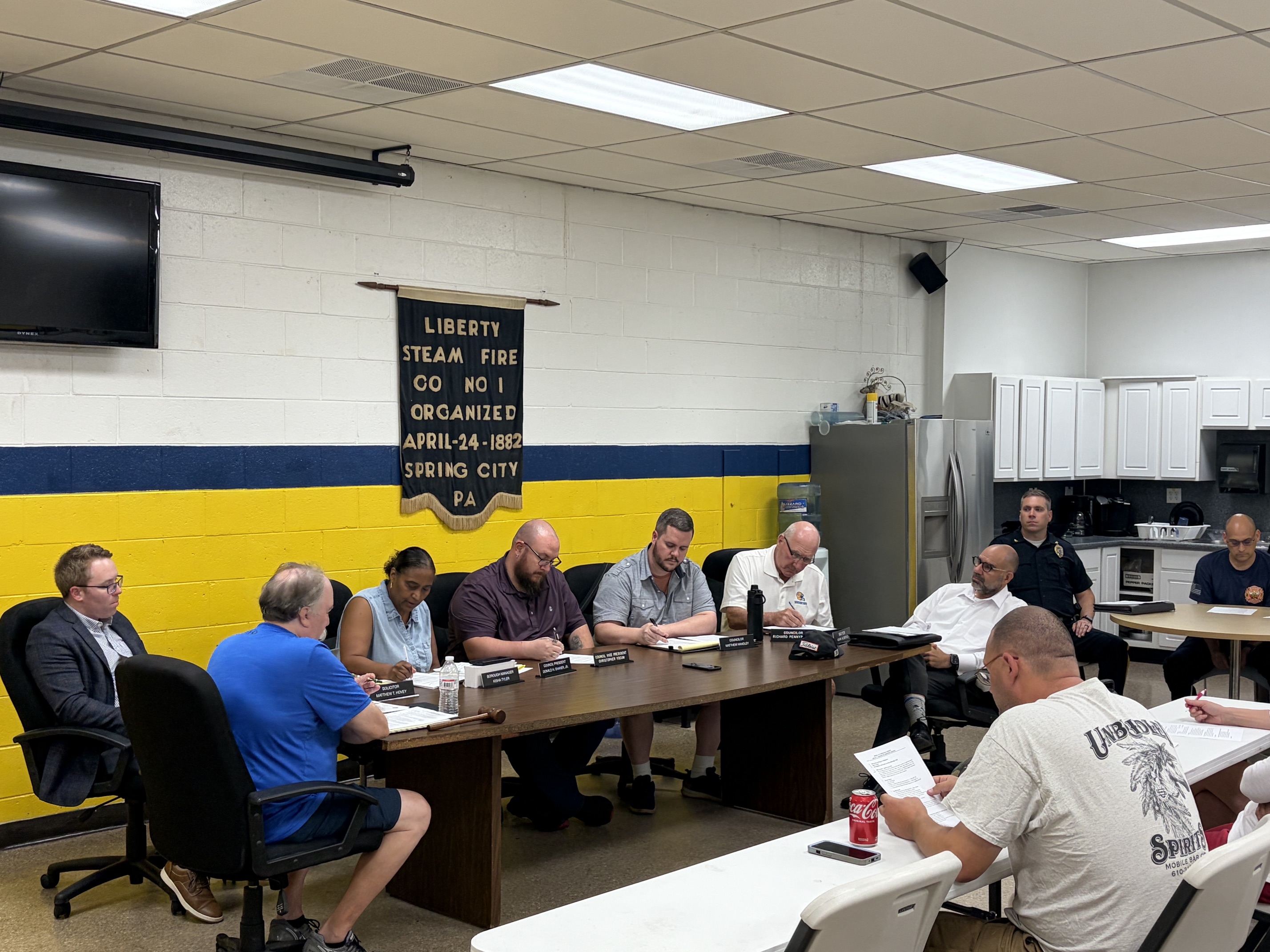
Spring City Borough Council is moving toward regulating potential data centers through a special exception process, which would allow council to participate in proceedings rather than serve as the adjudicating body.
During Monday’s council meeting, members reviewed an initial draft ordinance prepared by the borough's engineering and planning firm, LTL Consultants. The discussion centered on whether a data center should require a conditional use approval, decided by council, or a special exception, decided by the borough’s zoning hearing board.
Several nearby municipalities have taken the conditional use route. Limerick Township is actively holding a conditional use hearing for a proposed large-scale data center near the Limerick Generating Station, and East Vincent Township is defending its denial of a proposed data center at the Pennhurst property after the developer appealed.
Borough Solicitor Matt Hovey said the two approaches assign different roles to council. Under a conditional use process, council would serve as the adjudicating body, requiring members to remain impartial rather than publicly advocate for or against a proposal while the case is pending. Borough staff could still oppose an application, Hovey said, but council would have to remain separate from those efforts, requiring the borough to retain separate legal counsel for the advocacy and adjudicative roles.
Councilor Matt Handley said he favored the special exception approach after watching members of the East Vincent Township Board of Supervisors remain unable to state their views related to the Pennhurst data center proposal before and during proceedings.
"I would prefer to be able to speak my mind," he said, adding that the zoning hearing board also holds more expertise on zoning matters.
Councilor Dylan Hutchinson, participating in the meeting by phone, said he also leaned toward the special exception approach after Hovey confirmed borough council could obtain party status. Council Vice President Chris Yocum, who initially favored conditional use, said the discussion moved him toward special exception.
Yocum also asked whether the borough could effectively rule out data centers by prohibiting them within 1,500 feet of any residential building. Hovey cautioned that doing so could create an exclusionary zoning ordinance that would likely be challenged in court, as municipalities must reasonably provide for the use somewhere rather than ban it outright.
No Proposal on the Horizon
Spring City covers about one square mile, and no data center has been proposed. Yocum said the only conceivable location for a large-scale data center would be the 14-acre A.C. Miller property on East Bridge Street, assuming a company acquired and cleared the site.
"There is little to zero chance that a data center would ever even be possible within the borough of Spring City," he said, but added that he still wanted careful rules in place.
Council asked Hovey to return next month with possible language on noise restrictions, establishing a decibel limit based on county recommendations. Officials said they preferred to finalize the ordinance before formally advancing and advertising it, because substantive changes after submission to the planning commission would restart the review process.
Once council authorizes moving forward, Hovey said adoption would take roughly several months, including required submission to the borough and Chester County planning commissions and a public hearing.