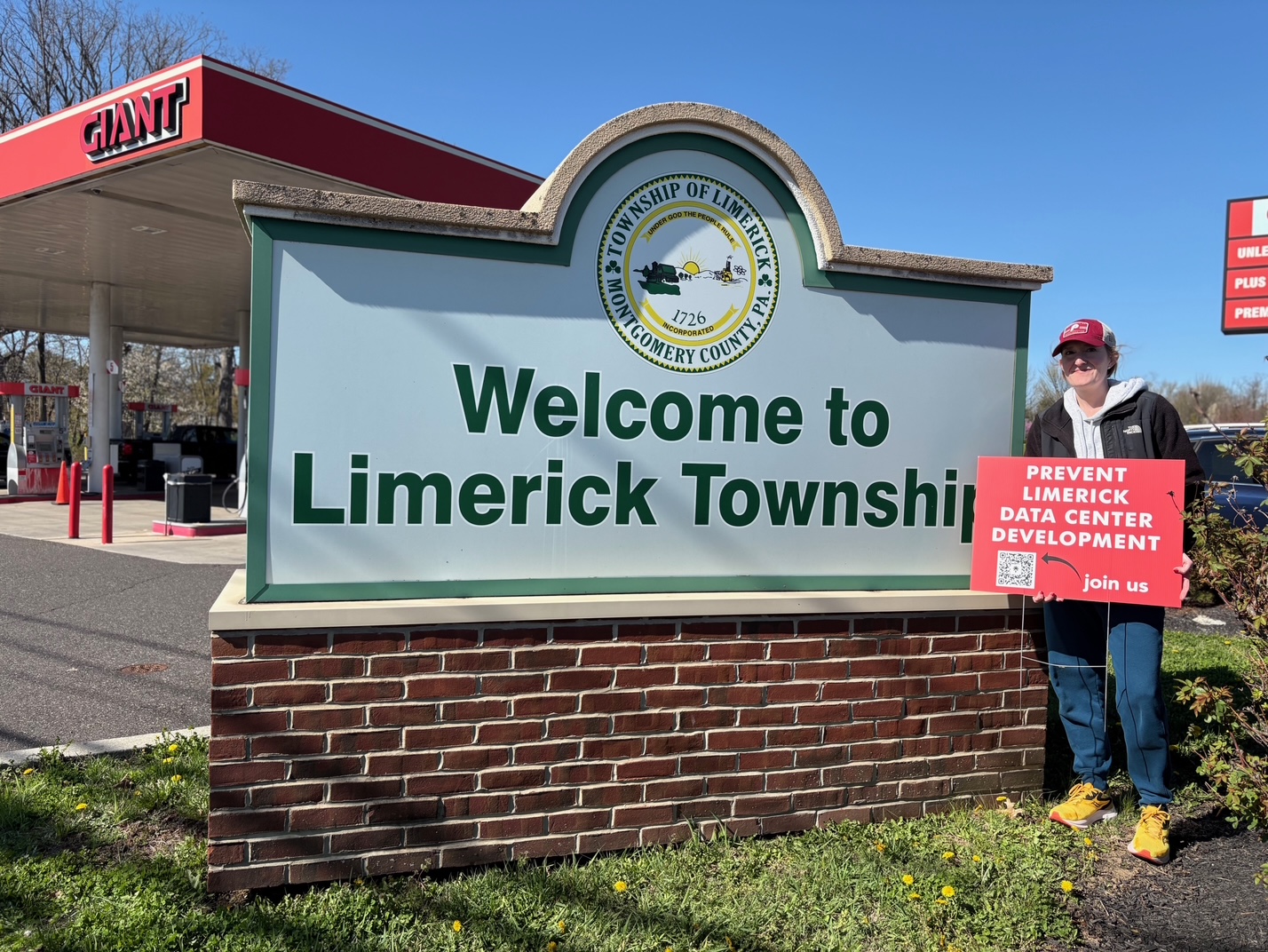
As Limerick Township weighs a proposal for a large-scale AI data center, a growing number of residents are mobilizing to oppose the project.
Among them is Chrissie Dziembowski of Linfield, one of the organizers behind a grassroots group called Prevent Limerick Data Center Development. The group, which has grown to more than 1,800 members on social media, has focused on raising awareness, organizing community meetings, and preparing for upcoming hearings tied to data center proposals.
Dziembowski sat down with Spring-Ford Press at the Royersford Library on Wednesday, the evening before planning commissions in Limerick and East Vincent were set to consider separate data center proposals. A conditional use hearing before Limerick’s Board of Supervisors is scheduled to begin Tuesday, April 14, at 6:30 p.m. at Spring-Ford High School.
Another Limerick data center project is also suspected to be taking shape at the former Publicker Distillery site in Linfield, following a land swap approved by the Pennsylvania Game Commission in January. The proposals are part of a broader wave of large-scale data center development across Pennsylvania.
For Dziembowski and the members of her group, the immediate goal is simple: make sure more people understand what’s being proposed, and give them a chance to engage before decisions are finalized.
We discussed how she got involved, what concerns she hears from residents, and what comes next.
This conversation has been edited for clarity and brevity.
Spring-Ford Press: How did you first get involved in this issue?
Dziembowski: I had no idea about any of this until January. A neighbor mentioned seeing something on the news about a data center, and I remember thinking, “What are you even talking about?”
I looked into it and realized how close it was to where we live. We’re basically between two areas that have been zoned for data centers, less than a mile in each direction.
From there, it just snowballed. I started talking to people in my neighborhood while my daughter and I were out selling Girl Scout cookies, asking if they had heard about it. Most hadn’t.
That was the starting point.
Spring-Ford Press: What turned that awareness into organizing?
Dziembowski: Going to that first township meeting.
There were so many people there they had to open a second room. People spoke for hours — longtime residents, new homeowners, families — and you could hear how much this meant to them.
Even with that turnout, the land swap still moved forward. That was a tough moment. It made people feel like their voices didn’t matter.
But for a lot of us, it had the opposite effect. It made us want to stay involved.
Spring-Ford Press: What are the main concerns for you and others you’ve spoken with?
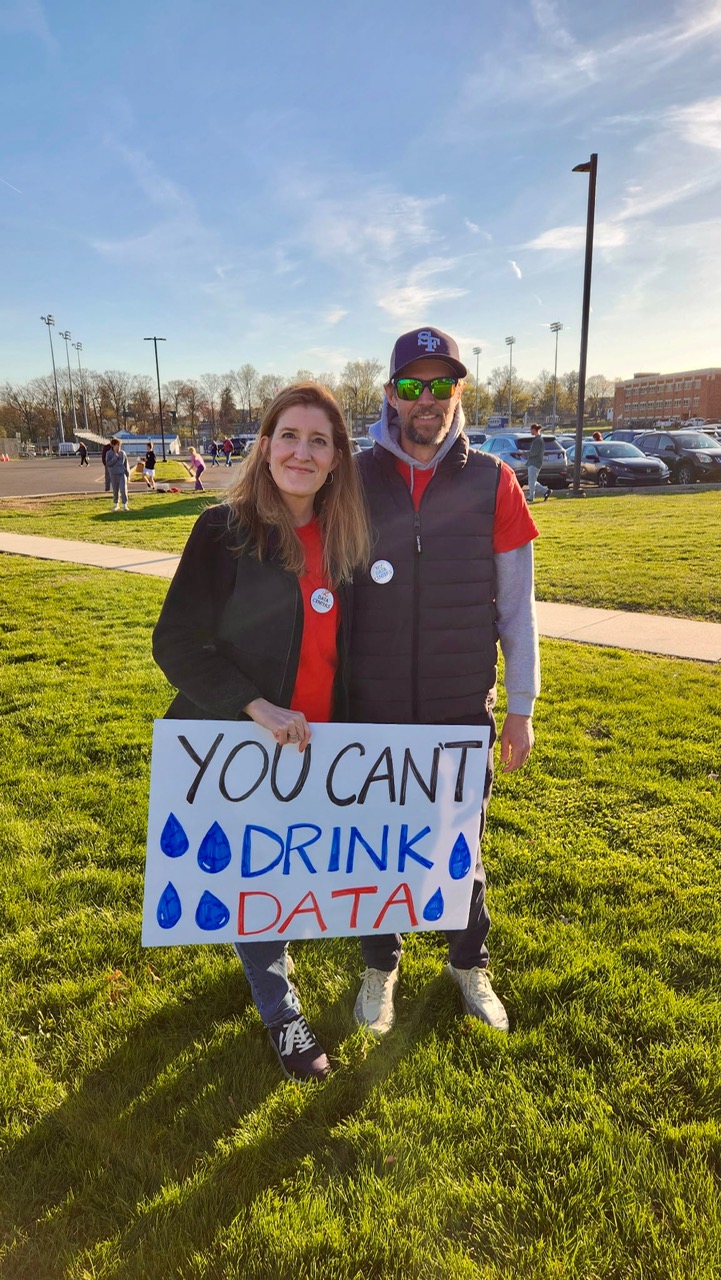
Dziembowski: For me, water is a big one. When you’re talking about something that could use 1.5 to 1.75 million gallons of water a day, in an area that already deals with drought conditions, that’s alarming. Water is a finite resource. You can’t just create more of it, and there are people here on well water who are genuinely worried about it running dry or becoming contaminated.
Energy use is another major concern. The numbers being discussed — hundreds of megawatts, enough to power hundreds of thousands of homes — are hard to even wrap your head around. And then you think about what that could mean for residents’ electric bills, which are already rising. I’ve heard from people who are already struggling to keep up with those costs, and the idea of adding something this energy-intensive on top of that is really unsettling.
Then there’s pollution and noise. This isn’t like living near a busy road where it comes and goes. What people are worried about is a constant, industrial-level hum, day and night, plus emissions from generators and other equipment. I think about what that means in real life. Not being able to open your windows. Not being able to sit outside and enjoy a cup of coffee. Losing that sense of peace in your own home.
I’m also concerned about the impact on wildlife. Birds and other animals could be driven away by continuous noise and disruption. And before the facility is even operational, there would be years of construction associated with it, bringing dust, more noise, and other environmental impacts.
Property values are another major worry. People have invested their lives in their homes, and there’s real concern about what happens if those homes are suddenly surrounded by large-scale industrial facilities. It’s hard to imagine who would want to buy a house in that kind of setting.
And underlying all of it is the sheer size of the proposal. Think about something as large as the King of Prussia Mall. For a township like Limerick, it’s not just another development. It’s something fundamentally different.
Spring-Ford Press: What has organizing looked like so far?
Dziembowski: Very grassroots. It started with a Facebook group, then people just started stepping up. Some of us made flyers. Others helped connect with organizations or gather information.
We’ve held a webinar with a nonprofit group to learn more about potential impacts, and we recently hosted an in-person community meeting so people could ask questions and talk through things together.
There’s also an effort underway to raise money for potential legal representation during the conditional use hearings. It’s really been people contributing whatever skills or time they can.
Spring-Ford Press: Do you see this as a political issue?
Dziembowski: Not really. From what I’ve seen, this is very bipartisan. People from all different backgrounds are concerned about it. It’s more about community and environment than politics.
Spring-Ford Press: What role does transparency play in this conversation?
Dziembowski: It’s huge. One of the challenges is that we feel like we don’t have all the information, like who the end user is or what the long-term impacts might be. There is so much unknown it is unrealistic to expect residents to feel comfortable with something of this scale.
Spring-Ford Press: What happens next?
Dziembowski: Right now, it’s about participation. We’re organizing around the upcoming hearings. We’re encouraging people to attend meetings, submit public comment, and stay informed.
A lot of people are still just learning about this. So a big part of the work is making sure people understand what’s being proposed and how the process works.
Spring-Ford Press: What have you taken away from this experience personally?
Dziembowski: How important local involvement is. I didn’t follow local government before this. Like a lot of people, I was focused on work and family.
Now I realize how much these decisions matter, and how important it is for people to pay attention and get involved.