For Dena Kelly, one of the most rewarding parts of her work is hearing from parents whose lives have been changed by feeding therapy.
After months or years of worrying about what their child will eat, avoiding restaurants, packing special foods for every outing, and searching for answers, parents often respond the same way when feeding therapy finally works.
"It's just getting the sigh of relief and the thank you from families at the end of my programs," Kelly said.
Those experiences helped inspire the creation of The BITE Foundation — a newly launched nonprofit organization based in the Royersford area that aims to help families overcome one of the biggest barriers to feeding therapy: cost.
The organization's name stands for Building Independence Through Eating, and its mission is twofold: provide financial assistance to families seeking feeding therapy and increase awareness of pediatric feeding disorders and other feeding challenges.
Kelly, who serves as the foundation's president, has spent nearly two decades working with children experiencing feeding difficulties. Throughout that time, she said she repeatedly encountered families who recognized their child needed help but couldn't afford treatment.
"The biggest struggle that families have is being able to afford the therapy for their kids," Kelly said. "They recognize the need. They know that there are resources out there. They just can't access them."
Addressing Financial Barriers
According to the foundation, families often face a combination of high out-of-pocket costs, insurance limitations, long waiting lists, and a shortage of specialized providers.
Michelle Schultheis, the foundation's vice president, said many parents find themselves caught between recognizing their child's needs and being unable to afford specialized care.
"They're just trying to make ends meet on their regular day-to-day salary, but they have to help their kid," Schultheis said. "They have this real need and desire and they don't have the ability to handle it. They don't have the funds."
In some cases, parents wait more than a year for openings in hospital-based programs while continuing to manage the challenges at home.
Many people hear about feeding disorders only when they become severe, but Kelly said the issues often begin with what appears to be ordinary picky eating.
A child who only eats a handful of foods may gradually become more restrictive over time, making everyday activities increasingly difficult. Family vacations, birthday parties, restaurant outings, and holiday gatherings can become sources of anxiety for both children and parents.
"Eating is such an important part of our lives," Kelly said. "Not just to survive, but the social aspect of eating is just as important."
More Than Picky Eating
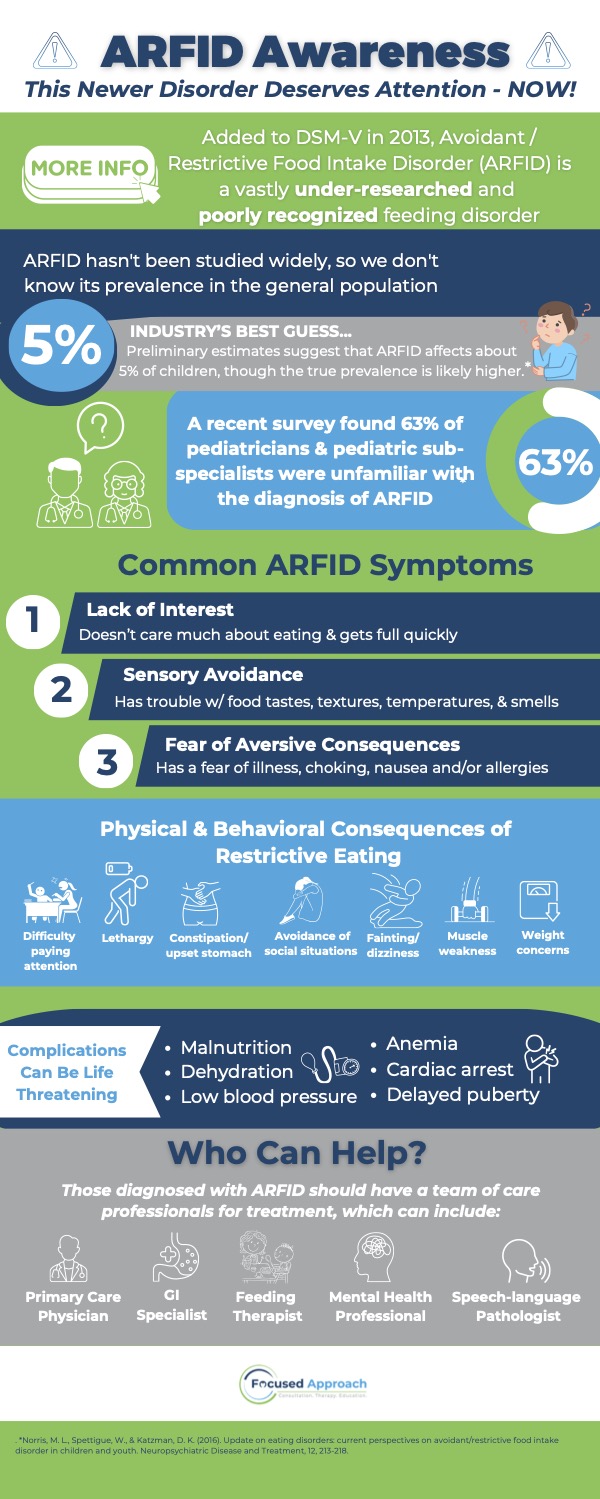
The foundation is particularly focused on helping children with Avoidant/Restrictive Food Intake Disorder (ARFID), an eating disorder characterized by extreme food avoidance or restriction that is not driven by body image concerns.
Board member Alyson Kuritz said many families don't realize their child's feeding struggles may be connected to a diagnosable condition.
"There are actual diagnoses and help available," Kuritz said.
She described parents whose children rely on a small number of "safe foods" and become distressed when packaging, ingredients, or even the appearance of a favorite product changes.
"If you've only got 10 foods that your kid will eat and all of a sudden now you're losing one or two, it's a big problem,” she said.
According to Kelly, feeding challenges can affect much more than nutrition. Children may avoid social situations, struggle at family gatherings, or feel isolated from their peers when they cannot comfortably participate in meals and celebrations.
For families, the stress can become a constant part of daily life. Parents often find themselves planning meals, worrying about nutrition, and wondering whether their concerns warrant professional help.
"If you're thinking about food or your child's food throughout the course of the day, things could be easier," Kelly said.
Raising Awareness
Another challenge, Kelly noted, is that many families are unaware feeding therapy exists at all.
Over the years, she has heard from parents who wished they had known about treatment options sooner, while others reported repeatedly raising concerns with pediatricians only to have them dismissed as normal developmental phases.
The foundation hopes to address that gap through education and outreach aimed at both families and medical professionals.
Earlier this year, Kelly spoke at several medical conferences focused on pediatric and nurse practitioner audiences. She said many healthcare providers told her they left with a better understanding of how to identify feeding disorders and connect families with appropriate resources.
"The dismissiveness does not come from genuinely not being interested in treating it," Kelly said. "It's the education component."
She said feeding disorders historically have not received the same attention as other pediatric health concerns, even as awareness of conditions such as ARFID has increased in recent years.
Building a Foundation
Although the BITE Foundation is headquartered in Royersford, its services are designed to support families nationwide. Funding can be used to help access feeding therapy services and related expenses, regardless of which qualified provider a family chooses.
The organization officially launched earlier this year after nearly a year of planning.
Its founding board includes professionals from a range of backgrounds, including feeding therapy, nutrition, behavior analysis, human resources, finance, communications, and healthcare operations. Kelly said building a “dynamic team of people” was intentional to help navigate the decisions and challenges related to running the nonprofit.
For now, the foundation's primary focus is building its initial fundraising base and increasing public awareness.
"We really would love to find businesses that have, in some way, a connection to this," Kelly said. "We'd love to connect with them and get involved in figuring out how to continue to expand our mission so that we can keep supporting these families."
Families interested in learning more about financial assistance opportunities can visit the foundation's website, while local businesses and community organizations can contact the group about partnership and fundraising opportunities.