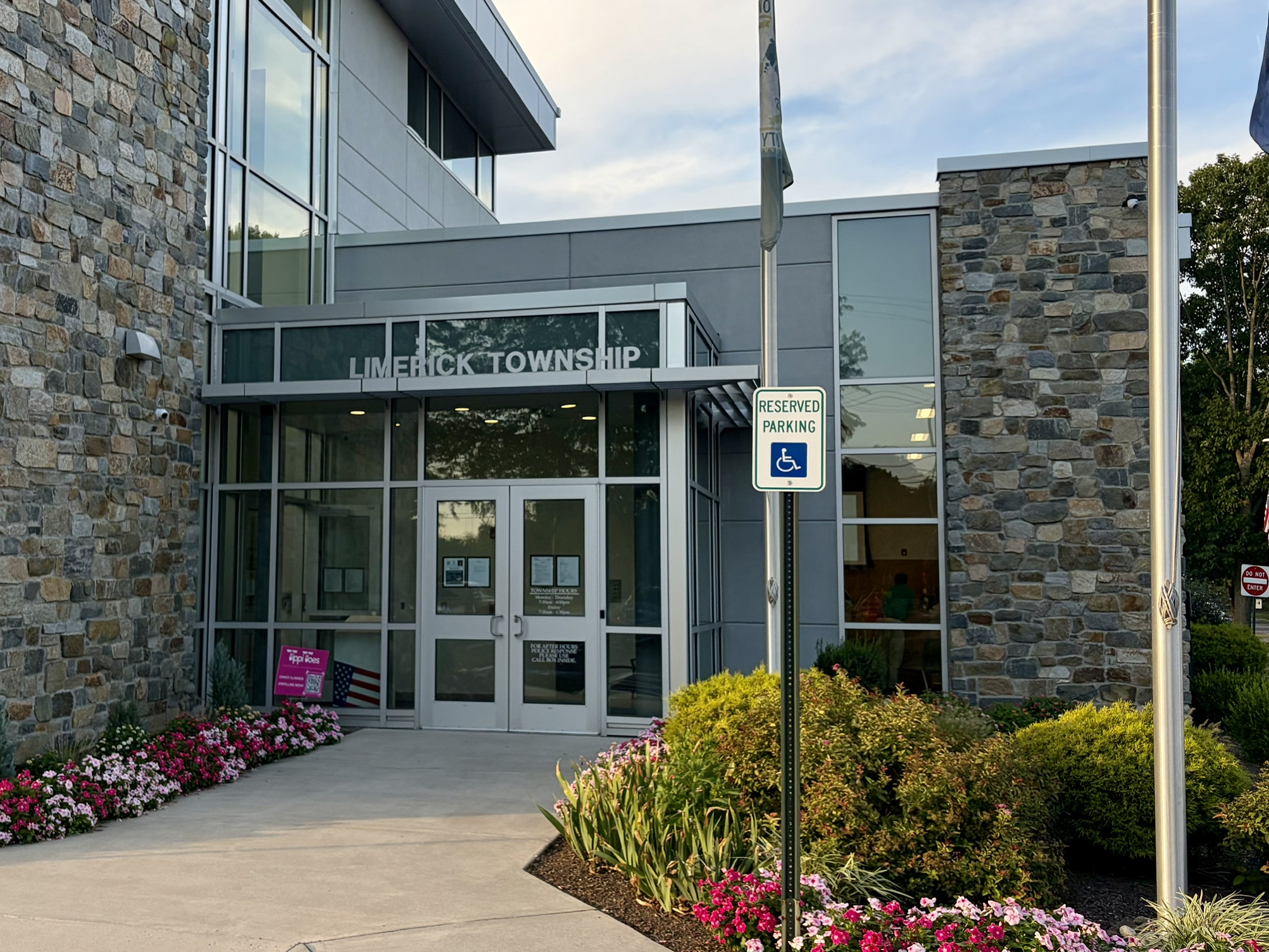
Limerick Township officials began laying the groundwork for the 2027 municipal budget September 22, presenting the board of supervisors with an overview of township finances, reserve funds, and a growing list of capital projects that could shape spending decisions in the coming year.
Officials emphasized that the presentation was intended as an educational and planning session rather than a vote on the 2027 budget. The discussion was designed to give supervisors and residents a snapshot of the township’s financial position heading into the formal budget process.
One of the central issues was the township’s general fund and the gap between recurring revenues and recurring expenses.
Township Manager Dan Kerr said the township is projecting a $1.174 million operating deficit in the general fund for 2026. He said the township had historically been able to offset a structural gap with unusually strong revenues from sources such as building permits and real estate transfer taxes while also adding money to reserves.
At the same time, Kerr said normal operating costs have been rising roughly 4 percent to 6 percent annually, representing an increase of approximately $400,000 to $700,000 from year to year.
The end of federal COVID-era funding also contributed to the increase in the projected deficit. Kerr said the township had received approximately $2 million in federal COVID funding and had used about $500,000 annually to offset police department expenses. That funding was no longer available in 2026.
Kerr said the township will use reserves to cover the 2026 shortfall, but cautioned that he believes this may be the last year the township can do so without negatively affecting reserves available for future uses.
Officials also emphasized a key distinction in municipal budgeting: whether recurring revenues are sufficient to support recurring services. They reviewed the different types of township funds and noted that restricted and committed funds cannot simply be redirected to other purposes.
Sewer-Sale Funds Remain a Major Component of Township Finances
A significant portion of the discussion focused on the roughly $60 million capital reserve holding proceeds from the township's sale of its sewer system, a deal approved in 2016 and completed in 2018.
Officials explained that the township currently budgets a $1.2 million transfer from the capital reserve to the general fund. The transfer is treated as a recurring revenue source and is used to offset the amount that otherwise would need to be raised through real estate taxes. According to the presentation, the $1.2 million represents roughly 23 percent of the township’s total real estate tax collections.
The capital reserve also supports other township and community capital needs, including transfers for EMS capital, police and public works equipment, and park-related capital projects.
A separate transfer of roughly $900,000 from the general fund helps support the Parks and Recreation Fund because the property-tax revenue directly assigned to that fund does not cover its expenses.
The township entered 2026 with approximately $63 million in the sewer-sale capital reserve. The year-end projection discussed at the meeting was approximately $58 million, although officials said investment values had already improved by about $500,000 from the end-of-August snapshot.
A resident asked whether the township has a minimum balance it wants to maintain in the fund. Kerr said that, if the township wants to continue using investment earnings to offset taxes at the current level, the fund should probably remain at no less than somewhere in the $50-million range. Falling below that level, he said, could require the township to consider other ways of replacing the revenue.
Officials also reviewed the history behind the sewer sale. Kerr said the township began examining its long-term capital needs around 2011 or 2012 after local fire companies requested additional funding. A subsequent analysis identified significant capital needs over the following 10 to 15 years.
The sewer sale was ultimately selected in 2016 as a way to fund those needs rather than relying primarily on tax increases.
The township adopted an investment policy in 2018 governing the use of the sewer-sale proceeds. Among its objectives are protecting the principal, providing long-term benefits to the community, supporting the general fund, eliminating township debt, and allowing the funds to be used for capital projects through the annual budget process.
Officials also said the township has been debt-free since 2018.
Capital Projects Carrying Into 2027
The board also reviewed capital projects that will carry into the 2027 budget, including several transportation projects.
One of the largest is the Lightcap Road project.
Phase 1 consists of a culvert replacement and is estimated at approximately $1.25 million. Officials said the funding package includes $250,000 through the Pennsylvania Commonwealth Financing Authority, $500,000 through the commonwealth’s Redevelopment Assistance Capital Program, and a $500,000 township match.
The township has allocated $500,000 from capital reserves toward its match, although officials said in-kind work performed by the township’s Public Works Department could also count toward that amount.
Officials said Phase 1 construction is tentatively being considered for fall 2027 or spring 2028.
Phase 2 is a broader improvement project extending along Lightcap Road between Airport Road and Possum Hollow Road. It is estimated at approximately $5 million, not including the Phase 1 culvert work.
The larger project would include right-of-way costs, widening the roadway to 28 feet, full-depth pavement reconstruction, drainage improvements, pedestrian improvements, and underground utility work.
The township also has a $550,000 multimodal transportation grant for Phase 2. No construction target has been established for that phase, which remains dependent on securing additional funding.
Officials said the township will continue seeking outside funding for Phase 2 in an effort to minimize the amount of local money required.
Officials also indicated the board will need to determine its grant strategy and prioritize which projects to pursue because the township will not be able to secure grants for every project. Lightcap Road was identified as the highest-priority project the board had directed the administration to pursue.
Other capital projects discussed included improvements involving Airport Road and the Sanatoga interchange area, as well as transportation improvements connected to Route 422, the Longview Road and Possum Hollow Road area, and Linfield.
Officials said many of those projects stem from transportation needs identified through the township's 2009 comprehensive plan and a subsequent Sanatoga master plan.
Looking Ahead
The township is also continuing work on a potential community center. Officials said cost estimates from ongoing studies are expected to be presented to the board around mid-October.
Officials told the board that municipal budgeting should be viewed as an ongoing cycle involving forecasting, deliberation, adoption, and monitoring. They said the township must consider not only whether a budget balances in a single year, but whether recurring revenues will continue to support recurring expenses in future years.
The township’s formal budget schedule will continue through the fall. Officials expect to review the developing budget again in November, with the proposed budget required to be advertised for 20 days before adoption. The township hopes to complete the process at the board’s December 15 meeting, ahead of the December 31 deadline.
No final 2027 budget decisions were made during the September 22 presentation.