Limerick Township supervisors are considering changes to zoning along Ridge Pike that could eliminate townhouses as a development option and change how much residential construction is permitted behind the corridor’s commercial properties.
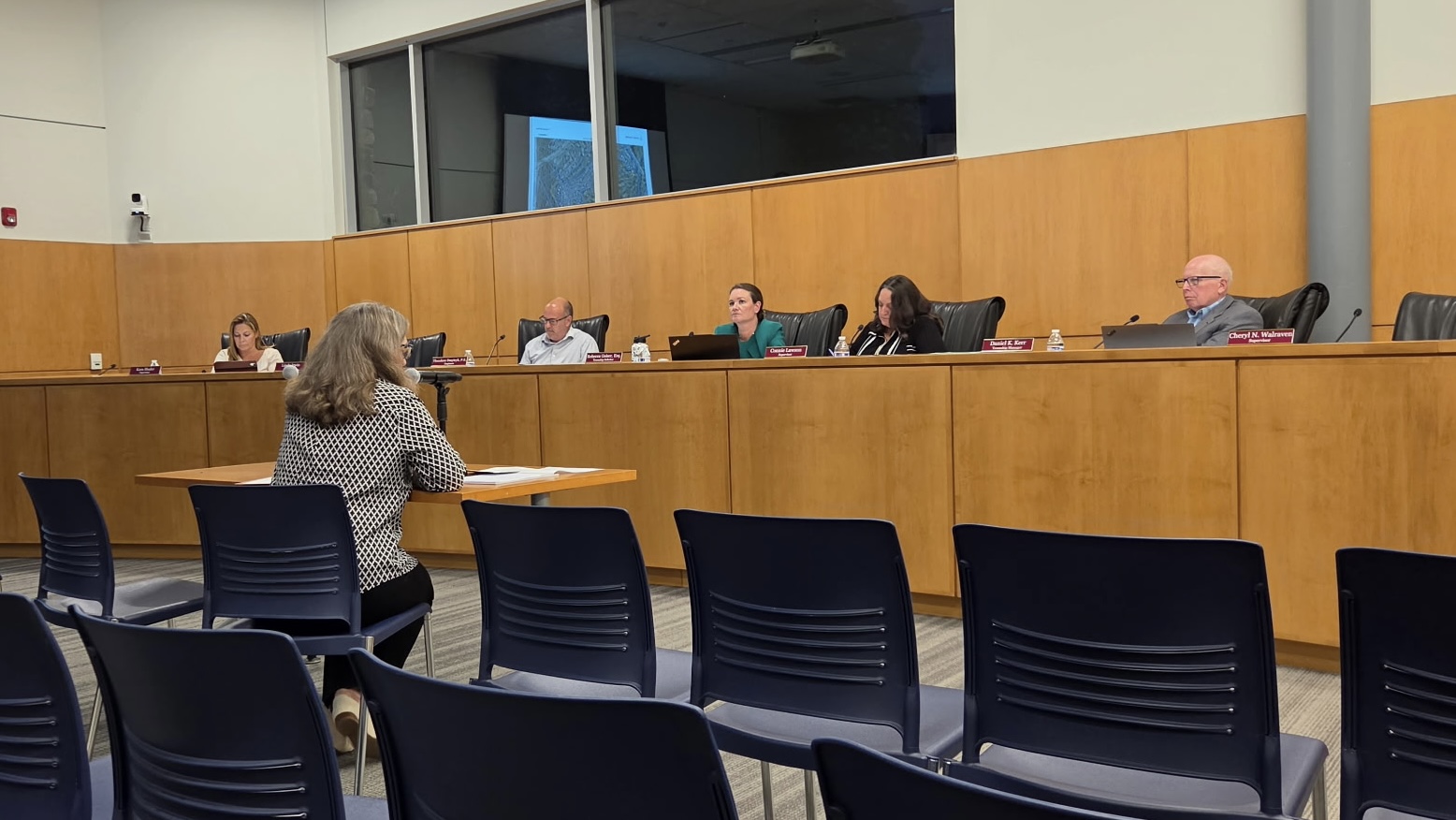
Township planning staff outlined the potential changes during the board of supervisors’ September 1 meeting, following a broader July discussion about the future of the Main Street zoning district.
No ordinance has been approved. Staff plans to return with proposed changes covering housing, residential density, and open-space requirements.
Townhouses Could Be Removed
One of the clearest changes under consideration is removing townhouses as a conditional use in the Main Street district.
The district currently permits two-family homes, townhouses, and small-lot single-family homes as conditional uses at least 300 feet from Ridge Pike, allowing commercial development to remain closer to the roadway.
Greta Martin Washington, the township's director of community planning and zoning officer, said removing townhouses could encourage other forms of residential development, including smaller-lot single-family homes or communities resembling Golf Ridge.
Golf Ridge includes substantial open space and uses lot dimensions that Martin Washington said have similarities to standards already found in the Main Street district.
Supervisor Kara Shuler also questioned whether apartments should remain an option in the district. Apartments are currently permitted above commercial uses on the second and third floors, although standalone apartment buildings are not allowed.
That question remains separate from the proposed removal of townhouses.
Township Could Rewrite Density Formula
Supervisors are also considering changing the formula used to determine how many homes can be built as part of a Main Street development.
Currently, developers are allowed one residential unit for every 1,200 square feet of nonresidential floor area.
Martin Washington said that approach can create an incentive to maximize commercial square footage in order to gain additional residential units, rather than designing the commercial portion around what makes the most sense for the property.
Staff instead suggested tying residential density to the amount of buildable land on a site, potentially excluding floodplains and other environmentally constrained areas from the calculation.
Commercial development could still be required along Ridge Pike even if residential density is calculated separately.
Board Chair Connie Lawson said she continues to favor commercial uses toward the front of properties with residential development farther behind them.
Broader Future of Ridge Pike Still Under Discussion
The proposed zoning amendment is narrower than some of the ideas supervisors discussed in July.
That earlier conversation included potentially reducing the size of the Main Street district or dividing Ridge Pike into separate areas geared toward uses such as village commercial development, shopping, and light industry.
Supervisors also discussed encouraging a more walkable, village-style corridor rather than conventional strip development.
Martin Washington indicated that larger questions about restructuring the Main Street district would be more appropriately considered as the township works through its comprehensive planning process.
For now, staff is expected to focus on the more immediate zoning changes involving housing types, residential density and open-space standards.