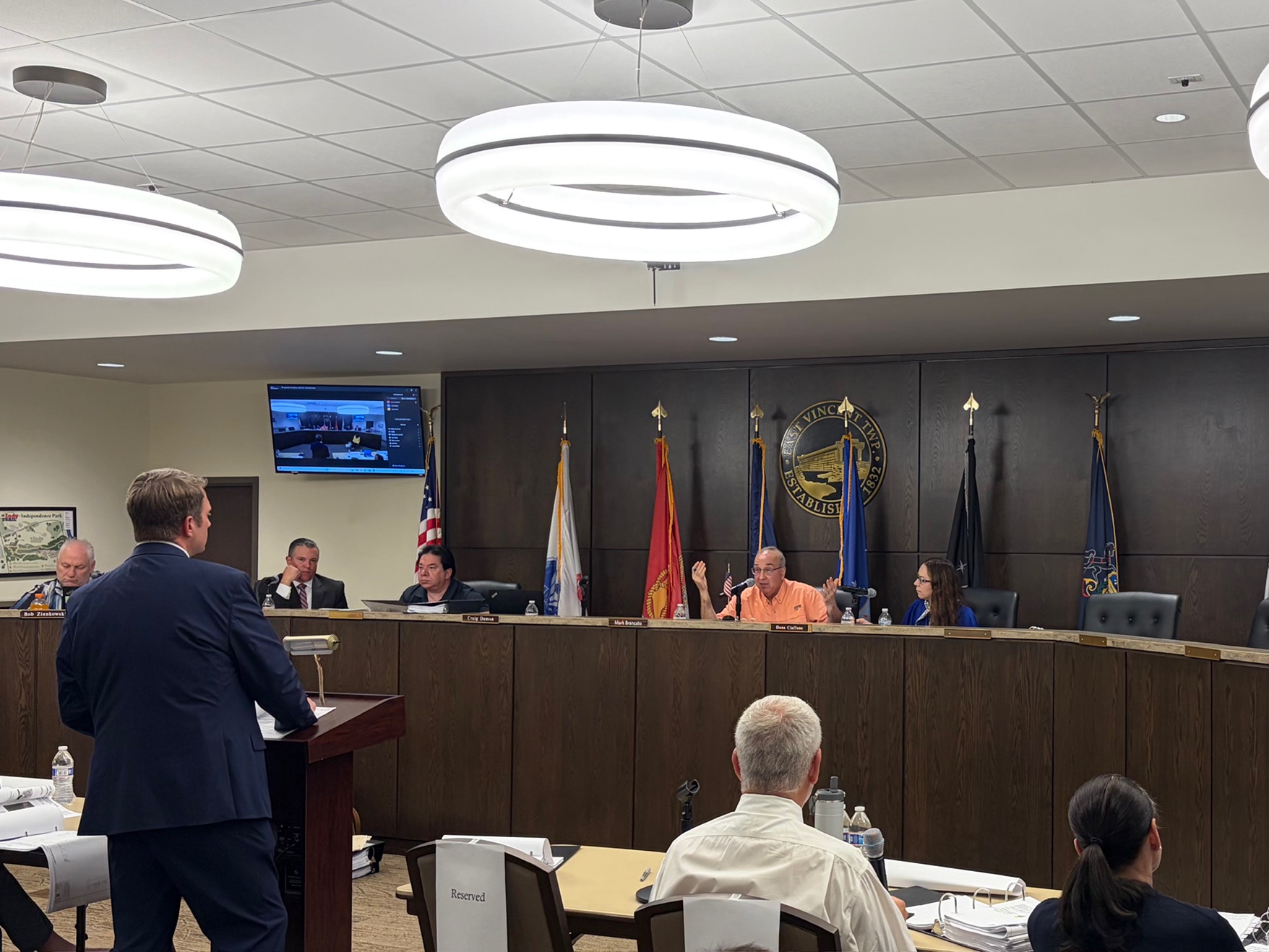
The engineer for a proposed 53-home community on Stony Run Road told East Vincent Township supervisors Wednesday that the plan avoids disturbing environmentally sensitive areas as the board pressed for more detail on open space, stormwater, and earlier approvals tied to the property.
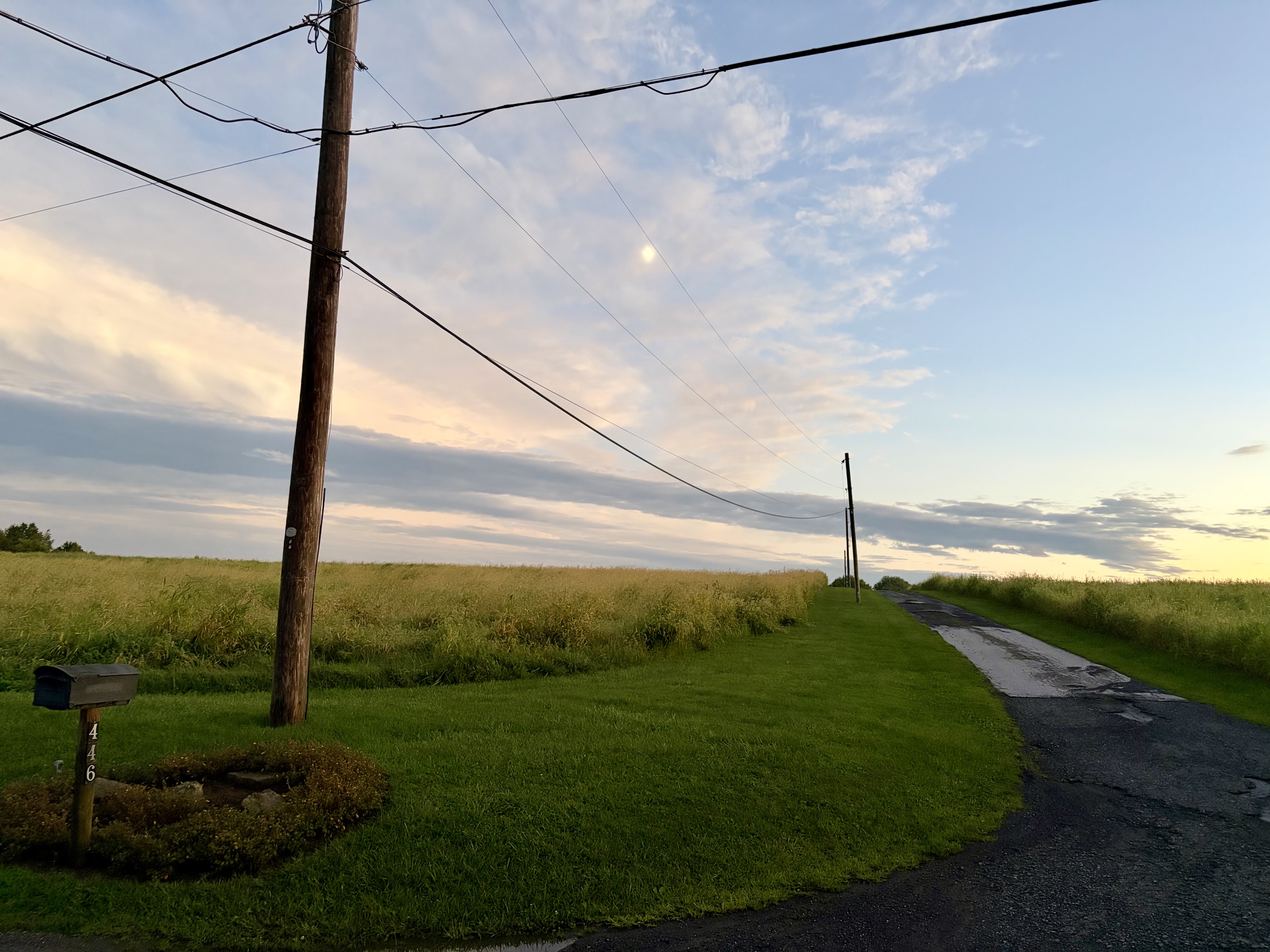
The testimony came during the second night of a conditional use hearing on a proposal by AQ Dev, LLC to build 52 new single-family detached homes, plus the existing farmhouse, on a nearly 68-acre tract at 446 Stony Run Road known as the Ruth Farm. The developer is seeking to build under the township's open space design option using transferable development rights in the Low Density Residential District.
The hearing began in August.
Adam Brower, president of Edward B. Walsh and Associates, was qualified as an expert in civil engineering and served as the applicant's primary witness. Brower said the plan sets aside 30.72 acres of open space, routes homes onto a curvilinear road network with on-street parking limited to one side of a 26-foot-wide paved roadway, and connects each lot to public sewer through individual grinder pumps feeding a low-pressure force main.
The force main would extend about 1,300 feet east along Stony Run Road to a gravity manhole at the intersection with West Bridge Street, Brower said. He noted the connection to the public system helps protect Stony Run, which he described as a high-quality stream, from possible failures or leaching associated with on-lot sewage systems.
Brower said the tract would be served by public water and sewer and that the proposed development would not disturb wetlands, the stream, the 100-year floodplain, the township riparian buffer, or wooded areas along the stream.
Board Questions Open Space and Basins
Board Chair Mark Brancato repeatedly questioned whether stormwater basins and land that cannot otherwise be developed should count toward the plan's open space.
Brancato said a significant portion of the proposed open space consists of wetlands, floodplain, and other land that cannot be developed or readily accessed for recreation. Brower responded that the areas meet the definition of open space under the township code.
Brower said the plan's proposed 30.72 acres of open space are less than the township's standard requirement of 50 percent, but that requirement can be reduced when a developer uses transferable development rights to increase the permitted density. Supervisor Dana Ciaffone questioned the applicant's calculation, including whether it overstated how much the open-space requirement could be reduced. Brower said he would recheck the math.
Prior Plans and an Active Permit
Brower testified that the property has been the subject of several previous development plans prepared by his firm.
Those included a 50-lot plan that received conditional use approval in 2004, an 86-lot plan that was denied, and a prior 53-lot proposal that received conditional use approval in 2023. The earlier conditional use approvals have since lapsed.
Much of the questioning focused on an individual National Pollutant Discharge Elimination System (NPDES) permit issued by the Pennsylvania Department of Environmental Protection (DEP) in January 2025. Brower confirmed that the permit was issued based on the denied 86-lot plan.
He testified that the permit remains active but would need to be amended if the current development moves forward because the road network, lot configuration, and other elements have changed.
Brower said the applicant expects the changes to qualify for a minor amendment. He testified that the current plan proposes fewer homes, fewer road and paved improvements, less impervious coverage, and no new areas of earth disturbance compared with the 86-lot plan, while retaining the same general stormwater basin locations and storage capacity.
Brancato questioned how an NPDES permit issued for the denied 86-lot plan would apply to the current 53-lot proposal.
Brower said the DEP permit is based on state stormwater regulations and is not dependent on township approval of a particular land-development layout. He said an active permit can be modified when a project changes and can also be transferred between entities.
Questioning during the hearing identified Artisan Construction as the current permit holder. Brower said that transferring such permits between entities is common.
Brower also confirmed that the stormwater design associated with the NPDES permit required township waivers and said he believed one of those waiver issues had since been eliminated.
Documents to Follow
The board asked the applicant to produce deeds clarifying the parcels involved after Township Solicitor Joe Clement noted inconsistencies between deed references listed on the conditional use application and those shown on the project plans.
Clement said one reference on the application appeared to identify a parcel in the Rural Conservation District that was not one of the two principal parcels involved in the proposal. The applicant agreed to return with deeds to clarify the record.
Supervisors also requested test-pit results and a map for the northern portion of the tract after a soil consultant's letter discussed testing in the southern portion of the property.
Brower said extensive testing had been conducted across the tract but said he did not know the results from the northern portion offhand. Brancato said the board wanted to see the documentation, while Ciaffone requested a map showing where the test pits were located.
Brower also described the tract as historically agricultural, with crop fields, hay and meadow areas, cattle pasture, and a stone farmhouse and barn. He said agricultural use of the property dates to the 1800s.
Separately, Brower testified that he recently returned to the property to investigate concerns that additional streams could exist within the southern wetland and pasture area.
He said he walked the area looking for defined beds and banks or other drainage features and found none. Brower said his assessment concluded that Stony Run is the only stream on the site.
The hearing was continued to October 19 at 6:30 p.m., with additional questioning of Brower expected. The applicant has also indicated that more witnesses will testify as the hearing proceeds.