A Life on Hold: Royersford Man Seeks Kidney Donor at 28
JM
John McGuire
•
Published Jun 5, 2026 at 12:48 PM EDT
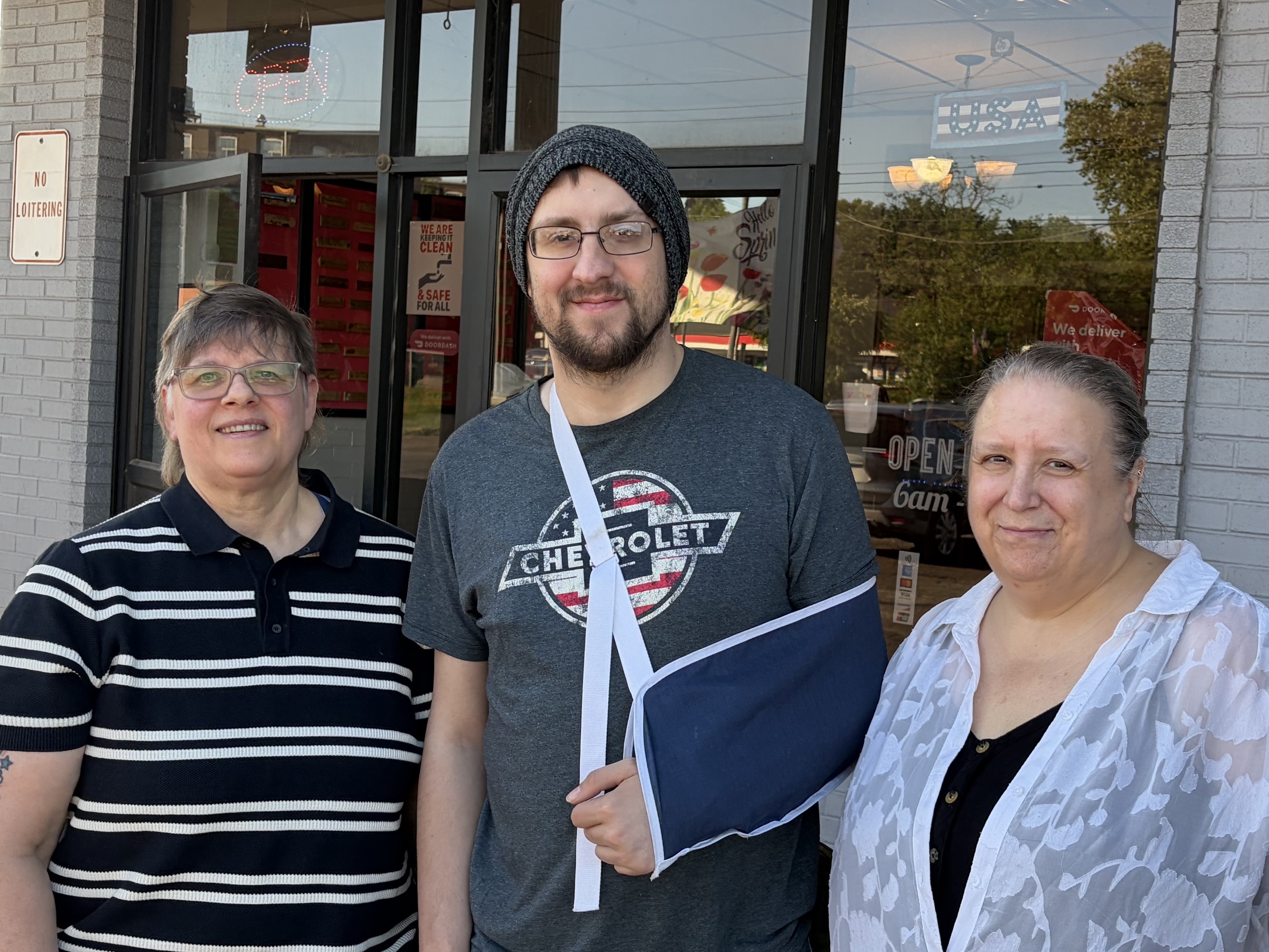
Dylan Schwarz, his stepmom Rae Theodore (L), and mom Christine Hefner (R), spoke with Spring-Ford Press at the Spring-Ford Diner. Photo: John McGuire
Sitting next to Dylan Schwarz, the impression he gives isn't fear. It's not denial. It's not anxiety.
It's exhaustion.
Not the kind that comes after a long day at work or a sleepless night. The kind that settles in after years of illness, countless medical appointments, and months of dialysis treatments that leave him physically drained.
Once an avid bicyclist, Schwarz should be planning his future. Instead, at 28 years old, his life revolves around surviving the present.
"It sucks," Schwarz said bluntly during a conversation at the Spring-Ford Diner. "I miss being able to do all the things I could do. I hate being stuck inside sitting in bed all day. I wish I could get out and ride, but I just don't have the energy for it anymore."
The Royersford resident is seeking a living kidney donor through the National Kidney Registry after a medical crisis last fall revealed that his kidneys were failing.
Before that, life looked very different.
He worked full-time at Royersford Spring Company, spending much of his free time riding his bike along the Schuylkill River Trail. Long rides of 20 miles or more were common. He enjoyed carpentry work, solving puzzles, and spending time outdoors.
But beginning around 2020, he started experiencing a series of unexplained health problems. He struggled with fatigue, breathing difficulties, nausea, and other symptoms. Despite visits to numerous specialists, no one could identify the cause.
By late 2022, he no longer felt well enough to continue working.
Then, in October 2025, years of unanswered questions turned into a medical emergency.
After becoming severely ill and unable to keep food down, Schwarz went to the ER expecting treatment for a digestive issue. Blood tests instead revealed advanced kidney failure.
Within hours, doctors were discussing dialysis and the likelihood that he would need a transplant.
Schwarz spent two and a half weeks in the hospital, including time in intensive care. He underwent emergency dialysis treatments, received blood transfusions, and came dangerously close to requiring a ventilator.
Months later, doctors identified a likely culprit: atypical hemolytic uremic syndrome, or aHUS, a rare disease associated with abnormal immune system activity that can damage blood vessels and organs.
Life Built Around Dialysis
Today, Schwarz undergoes dialysis three times each week. The treatment itself lasts about four hours, but transportation and waiting times stretch each visit into an ordeal that consumes much of the day.
"Dialysis kind of wipes me out," he said, his arm still in a sling from a recent fistula procedure, part of the ongoing process of managing his dialysis treatments. "Those days are rather rough."
The impact extends far beyond the treatment chair.
Basic tasks now require careful planning. His diet is heavily restricted. He carries medications with him wherever he goes. During the conversation at the diner, a sudden wave of nausea forces him to reach for his pills.
Even severe weather, like the snow and ice storms the Royersford area experienced this past winter, can become a concern if it threatens access to dialysis treatments.
Schwarz approaches the situation with remarkable calm.
Asked why he seems so matter-of-fact about an illness that has transformed his life, he offered a simple explanation.
"I've learned that if my emotions tend to run high, my breathing problem starts to get worse," he said. "I try to manage it as best I can."
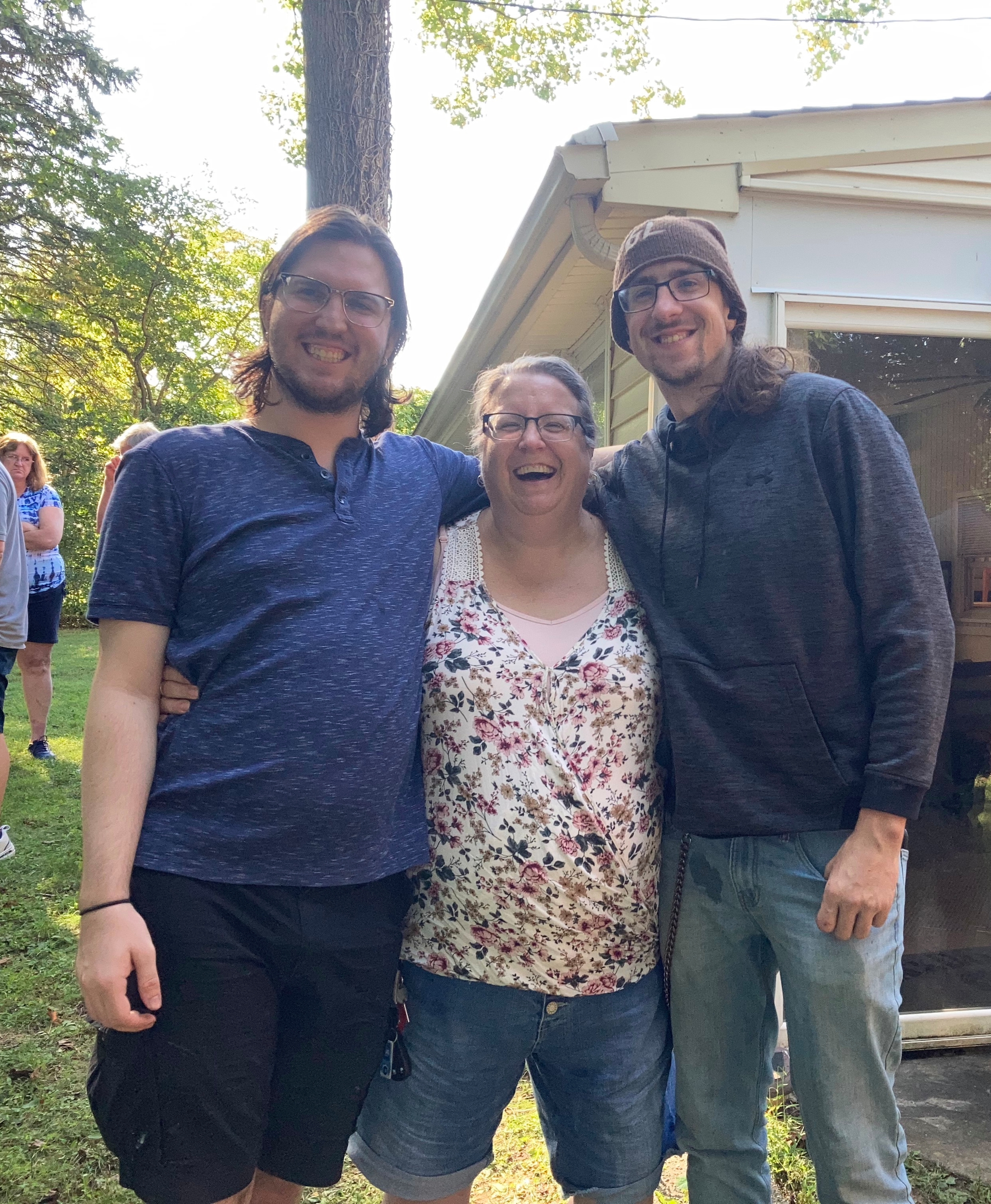
Christine Hefner, with her sons Nathan (L) and Dylan (R). - Photo: Provided by Christine Hefner
Navigating a New Reality
While Schwarz manages the physical burden of kidney failure, his family carries a different kind of weight.
His mom, Christine Hefner, has effectively become his full-time caregiver. A nurse with more than three decades of experience, she is currently on leave from work while helping him navigate a medical system she describes as extraordinarily complex.
"I'm a nurse. I've been a nurse for 34 years, and I'm still dumbfounded by everything," Hefner said. "I don't understand everything fully, but I feel like he would have such a hard time navigating the system without me."
The appointments alone are overwhelming. Between dialysis, specialists, testing, and transplant-related care, the family regularly travels throughout the Philadelphia region.
For Hefner, one of the hardest parts has been watching a son who once seemed destined for complete independence suddenly need help with nearly every aspect of daily life.
"He was active. He was out all day. He would go out with his friends on road trips. They did all kinds of things," Hefner said, her eyes fixed on her son. "Then all of a sudden, it was like everything just crumbled."
Schwarz’s stepmom, Rae Theodore, said the illness has changed the trajectory of the entire household.
Before Dylan became seriously ill, she and Hefner were preparing to sell their large Royersford twin home and downsize. Those plans are now on hold indefinitely.
"It just turns your life upside down," Theodore said.
According to Theodore, the experience has also changed how the family views everyday frustrations. Broken appliances, misplaced belongings, and other minor inconveniences no longer seem nearly as important.
"You think things like this never will happen to you," she said. "It's always somebody else's kid or somebody else's family."
Despite the challenges, the family searches for silver linings wherever they can be found.
Long drives to medical appointments have become opportunities for conversations that might never have happened otherwise. Small outings, like sharing a meal at the diner, have taken on greater significance.
They also remain hopeful about what life could look like after a transplant.
Hefner describes her son as exceptionally intelligent and endlessly curious. As a child, he loved puzzles and challenged adults with questions they couldn't answer.
"When he was three, he demanded that I explain infinity to him, and I couldn't," Hefner said with a laugh. "He was really mad."
Today, Schwarz talks about wanting to invent things someday, though he keeps the details of those ideas to himself.
Right now, the focus is much simpler.
A successful kidney transplant would mean the possibility of returning to work, riding his bike again, and reclaiming his life.
Nathan and Dylan in their younger years. - Photo: Provided by Christine Hefner
How You Can Help
Schwarz is seeking a living kidney donor through the National Kidney Registry.
The search has already encountered one setback. Schwarz's younger brother Nathan immediately volunteered to be tested when the family learned a transplant might be necessary. After completing the evaluation process, however, he was ultimately deemed ineligible to donate.
Despite that setback, the family remains hopeful.
People can help by sharing Schwarz's story and learning more about living kidney donation. One of the most common misconceptions, the family said, is that a donor must be a direct match for Schwarz in order to help him.
Through the National Kidney Registry's voucher program, a donor may be able to donate a kidney to another compatible recipient while still helping Schwarz. In return, Schwarz would receive a voucher through the registry that could help connect him with a living-donor kidney. In some cases, a single donation can trigger a chain involving dozens of donors and recipients — sometimes resulting in as many as 30 transplants.
The family also hopes to raise awareness about the realities of living kidney donation.
According to the National Kidney Registry, healthy people can live full and active lives with one kidney. The organization also offers support programs that may help reimburse lost wages, travel expenses, lodging costs, dependent care, and other expenses associated with donation.
In the unlikely event that a living donor later develops kidney failure themselves, the registry provides protections that can help prioritize them for a future transplant.
For Schwarz and his family, every new person who learns about living donation represents another chance at getting his life back.
Nathan (L) volunteered to be evaluated as a potential kidney donor for his brother Dylan (R) but was ultimately deemed ineligible to donate. - Photo: Provided by Christine Hefner